

Masor Tenga is a light, tangy Assamese fish curry, soured with tomato, green mango or elephant apple rather than heavy spices. This refreshingly simple curry reflects the Northeast's preference for lighter, less oil-heavy cooking styles.
Masor Tenga at a Glance
| Cuisine | Assamese |
|---|---|
| Country | India |
| Meal | Lunch |
| Course | Main / Curry |
| Food Type | Non-Vegetarian |
| Difficulty | Easy |
| Preparation | 15 minutes |
| Cooking | 20 minutes |
| Total time | About 35 minutes |
| Servings | 4 |
| Suggested serving | 2 fish pieces with gravy |
Masor Tenga Ingredients
- 500g fish (rohu or similar), cut into pieces; 1/4 tsp turmeric (for marinating fish); 2 tomatoes, chopped; 1 small green mango or a handful of dried elephant apple, for sourness; 1 tsp mustard seeds; 2 green chillies, slit; a few fenugreek seeds; salt to taste; mustard oil; coriander leaves to garnish.
How to Make Masor Tenga
- Marinate the fish pieces with turmeric and salt; let sit for 10 minutes.
- Heat mustard oil in a pan until it just begins to smoke, then lightly fry the fish pieces until golden on both sides; remove and set aside.
- In the same oil, add mustard seeds and a few fenugreek seeds; let them splutter.
- Add tomato and the souring agent of choice; cook until softened.
- Add water and green chillies; bring to a boil and simmer for 8-10 minutes to let the sour flavour develop.
- Gently add the fried fish pieces and simmer for 5-7 minutes until cooked through, without over-stirring.
- Adjust salt and garnish with coriander leaves.
- Serve hot with steamed rice.
Cooking Tips
The souring agent — tomato, green mango or elephant apple — is central to this dish's identity as a 'tenga' (sour) curry; use what's available while keeping the tangy character. Add the fish gently towards the end of cooking and avoid excessive stirring, as it breaks apart easily. Keep the gravy relatively light and thin, as tenga curries are traditionally not heavily spiced or thick.
Variations
Use lemon juice as a simpler substitute for the souring agent if mango or elephant apple aren't available. Some households add a few slices of raw papaya for a different textural note.
Substitutions
Any firm white fish can substitute for rohu if unavailable locally.
What to Serve With Masor Tenga
Steamed rice, kept simple to let the tangy curry shine.
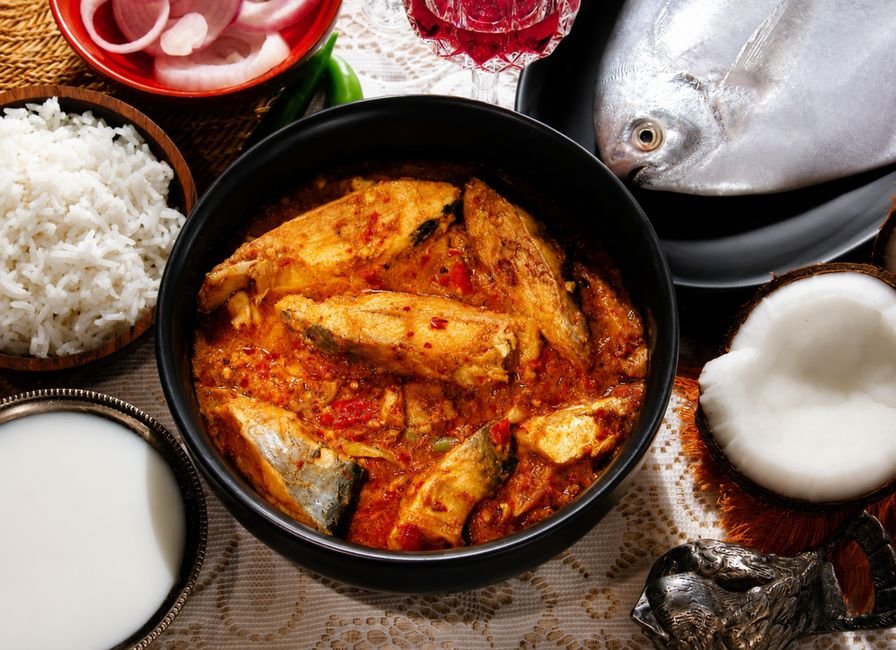
Storage & Reheating
Storage: Keeps refrigerated for up to 2 days; best enjoyed fresh given its light, brothy nature.
Reheating: Reheat gently on the stovetop on low heat to avoid breaking the fish.
Masor Tenga Nutrition Facts
Nutrition varies with exact ingredients, oil quantity and serving size. Approximate values per serving:
| Calories | 220 kcal |
|---|---|
| Protein | 25 g |
| Carbohydrates | 8 g |
| Fat | 10 g |
| Fiber | 2 g |
Values are estimates for planning purposes and should be treated as approximate.
Potential Nutritional Benefits
A light, low-oil, protein- and omega-3-rich curry; the tangy, mildly spiced style of Assamese cooking is often considered a lighter alternative to richer North Indian curries.
Age & Serving Guidance
Suitable for children from around 10-12 months onward, deboned very carefully with no small bones remaining.
For young children, take particular care with hot food, spice level, piece size, known allergies and individual chewing/swallowing ability.
Allergens & Food Safety
Allergens: Contains fish.
Check thoroughly for small bones before serving to children; ensure fish is fresh and fully cooked through.
Masor Tenga FAQs
What is elephant apple?
It's a sour fruit (outenga) traditionally used in Assamese cooking to add tang to curries like masor tenga; dried pieces are also available.
Can I use lemon juice instead of a traditional souring agent?
Yes, lemon juice is a simple, widely available substitute if green mango or elephant apple aren't accessible.
Why is masor tenga so light compared to other fish curries?
Assamese cuisine traditionally favours lighter, less oil-heavy, less spiced dishes compared to many other Indian regional cuisines.
What does 'tenga' mean?
It means 'sour' in Assamese, describing this style of tangy curry.
Can I use a different fish for this curry?
Yes, any firm, mild white fish works well as a substitute for rohu.
Is masor tenga very spicy?
No, it's traditionally mild, focusing on the sour flavour rather than heavy spicing; adjust green chillies to taste.
Can I make masor tenga ahead of time?
It's best enjoyed fresh given its light, brothy nature, though it keeps refrigerated for up to 2 days.
What is traditionally served with masor tenga?
Simple steamed rice is the classic pairing, allowing the tangy curry's flavour to stand out.
Helpful Resources
If you’re getting around Kuwait, check live routes, fares and timings on Kuwait Bus Route. And if you run a website or blog of your own, try these free SEO tools to check and improve it.
Lunch, Indian Lunch Recipes, Assamese Recipes, Non-Vegetarian Recipes — #Lunch #IndianLunchRecipes #AssameseRecipes #NonVegetarianRecipes