

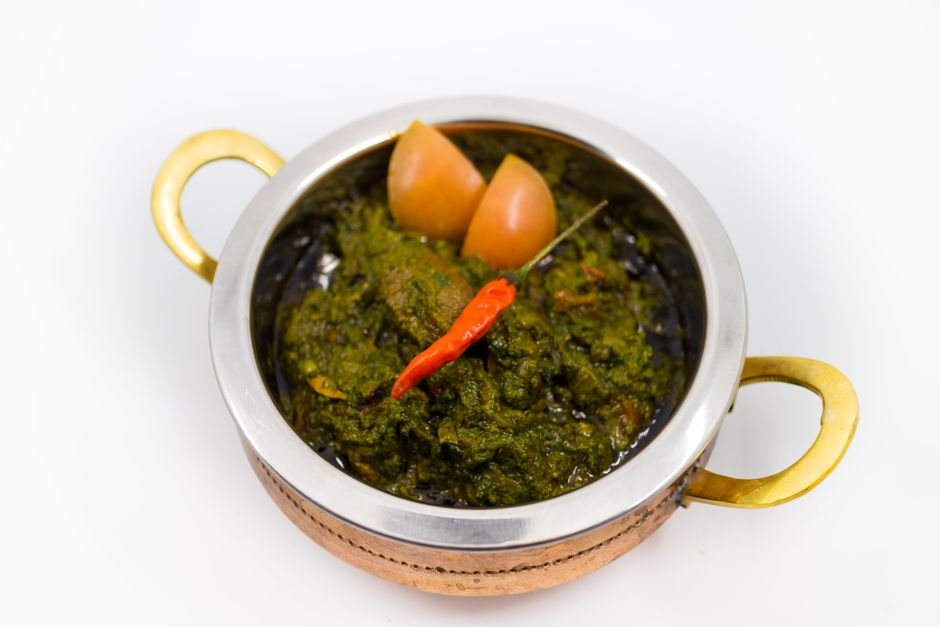
Sarson Da Saag is a hearty Punjabi winter dish made from slow-cooked mustard greens and spinach, mashed to a rustic texture and finished with ghee. Traditionally paired with makki di roti (corn flatbread), it's a beloved seasonal comfort food.
Sarson Da Saag at a Glance
| Cuisine | Punjabi |
|---|---|
| Country | India |
| Meal | Dinner |
| Course | Main |
| Food Type | Vegetarian |
| Difficulty | Medium |
| Preparation | 20 minutes |
| Cooking | 40 minutes |
| Total time | About 60 minutes |
| Servings | 4 |
| Suggested serving | 1 cup |
Sarson Da Saag Ingredients
- 500g mustard greens (sarson), washed and chopped; 200g spinach, chopped; 100g bathua leaves (or extra spinach if unavailable), chopped; 2 green chillies; 1 inch ginger; 1 onion, chopped; 2 tomatoes, chopped; 2 tbsp makki (corn) flour; 1 tbsp ginger-garlic paste; a pinch of hing; salt to taste; 3 tbsp ghee or white butter.
How to Make Sarson Da Saag
- Boil the mustard greens, spinach and bathua with green chillies and ginger in a little water until fully soft, about 20-25 minutes.
- Cool slightly and mash coarsely to a thick, textured puree, traditionally mashed with a wooden masher rather than blended smooth.
- Heat ghee in a pan; add hing, onion and ginger-garlic paste, and sauté until golden.
- Add tomato and cook until softened.
- Add the mashed greens and makki flour to thicken; mix well and simmer for 15-20 minutes, stirring occasionally.
- Adjust salt and consistency with a little water if needed.
- Top with a generous dollop of white butter or ghee before serving.
- Serve hot with makki di roti and a side of jaggery.
Cooking Tips
Boil the greens until completely soft, as undercooked greens result in a fibrous, less pleasant texture. Mashing coarsely by hand, rather than blending perfectly smooth, gives saag its traditional rustic texture. Add makki flour gradually to thicken, as too much can make the saag pasty rather than silky.
Variations
Add a little cream for a richer, restaurant-style finish. Some households add a small amount of jaggery to balance the mustard greens' natural bitterness.
Substitutions
If mustard greens or bathua aren't available, a spinach-heavy version can be made, though the flavour will be milder and less distinctly traditional.
What to Serve With Sarson Da Saag
Makki di roti (corn flatbread), a dollop of white butter, and jaggery on the side.
Storage & Reheating
Storage: Keeps refrigerated for up to 3 days; flavour often deepens the next day.
Reheating: Reheat gently on the stovetop with a splash of water or milk to loosen the consistency.
Sarson Da Saag Nutrition Facts
Nutrition varies with exact ingredients, oil quantity and serving size. Approximate values per serving:
| Calories | 220 kcal |
|---|---|
| Protein | 7 g |
| Carbohydrates | 20 g |
| Fat | 14 g |
| Fiber | 6 g |
Values are estimates for planning purposes and should be treated as approximate.
Potential Nutritional Benefits
An exceptionally nutrient-dense, iron- and vitamin-rich leafy green dish, traditionally paired with corn flatbread for a wholesome winter meal.
Age & Serving Guidance
Suitable for toddlers from around 10-12 months onward, mashed smooth with mild or no chilli.
For young children, take particular care with hot food, spice level, piece size, known allergies and individual chewing/swallowing ability.
Allergens & Food Safety
Allergens: Contains dairy (ghee/butter); naturally gluten-free.
Wash leafy greens thoroughly before cooking to remove any soil or grit.
Sarson Da Saag FAQs
Why is my saag bitter?
Mustard greens are naturally slightly bitter; balancing with a little jaggery or extra spinach can mellow the flavour.
Can I make sarson da saag without bathua?
Yes, if bathua isn't available, use extra spinach instead; the flavour will be slightly milder but still good.
Why is my saag watery?
Simmer a little longer to reduce excess moisture, and add makki flour gradually to help thicken it properly.
Can I blend the saag instead of mashing by hand?
A quick pulse blend works, but avoid making it too smooth, as the traditional coarse, rustic texture is part of the dish's character.
What is makki di roti?
It's a flatbread made from corn (maize) flour, the traditional accompaniment to sarson da saag.
Can I make sarson da saag ahead of time?
Yes, it keeps well refrigerated for up to 3 days and often tastes even better the next day.
Is sarson da saag only made in winter?
Mustard greens are a winter crop, so this dish is traditionally associated with the winter season, though frozen greens can extend availability.
Can I make a lighter version with less ghee?
Yes, reduce the ghee used for cooking and the final topping, though it will be less rich than the traditional preparation.
Helpful Resources
If you’re getting around Kuwait, check live routes, fares and timings on Kuwait Bus Route. And if you run a website or blog of your own, try these free SEO tools to check and improve it.
Dinner, Indian Dinner Recipes, North Indian Recipes, Vegetarian Recipes — #Dinner #IndianDinnerRecipes #NorthIndianRecipes #VegetarianRecipes