

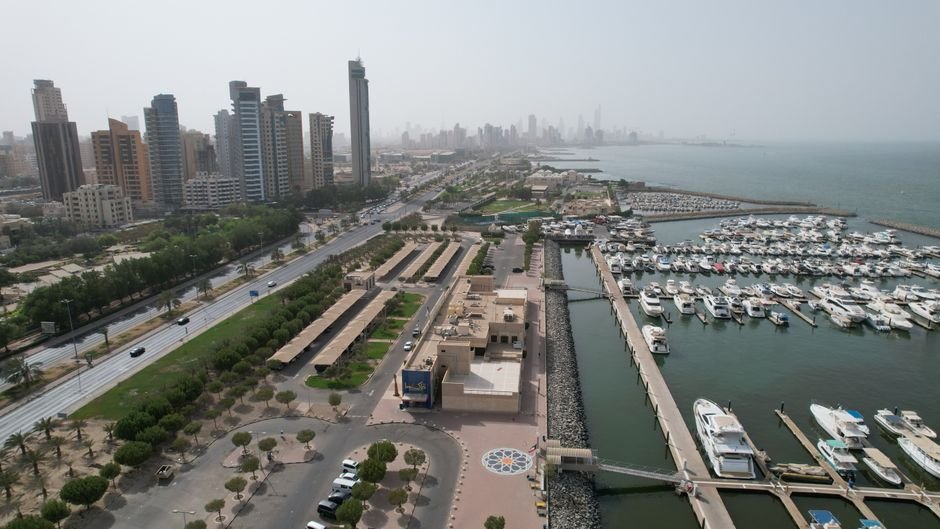
The Best & Worst Cities for Expats in 2020, iiQ8, Salmiya listed as worst city
The Best & Worst Cities for Expats in 2020, iiQ8, Salmiya listed as worst city | Destinations on the Iberian Peninsula come out on top in the Expat City Ranking 2020, with Valencia, Alicante, and Lisbon on the podium reports Internations.org. The other end of the ranking offers more mixed results, though.
The Best & Worst Areas for Expats in Kuwait
A quick clarification before diving in: Kuwait doesn’t really have separate “cities” the way people from other countries might picture — it’s mostly one connected urban area organized into governorates and named neighborhoods (Salmiya, Hawalli, Fintas, Jabriya, and so on). When people search for “best cities for expats in Kuwait,” what they usually mean is: which of these areas is worth living in, and which ones come with more headaches than they’re worth. Here’s a grounded look at both sides.
The Best Areas for Expats
Salmiya — Best for Social Life & Convenience
Salmiya is consistently the most recommended area for expats, and it’s easy to see why: a large expat population, waterfront walkways, major malls like Marina Mall and The Cube, and dense restaurant/café options within walking distance in many pockets. It’s often described as the go-to area for an active lifestyle, offering easy beach access and being a hub of expat life and social events. It’s more expensive than the southern suburbs, but for people who want city convenience without needing a car for everything, it’s the default pick.
Jabriya — Best for Families & Healthcare Access
Jabriya routinely comes up as a top pick for families specifically because of what’s nearby — hospitals, schools, and Kuwait University’s campus area. It’s home to many schools and hospitals, making it very convenient for families with children. It’s centrally located, well-connected, and calmer than Salmiya without being remote.
Mishref & Rumaithiya — Best for Quiet, Established Family Living
If Salmiya feels too loud, Mishref and Rumaithiya are the usual alternatives. Mishref is a well-planned residential area with villas, parks, and a community feel that’s very popular with families, while Rumaithiya is a leafy, established residential area popular with long-term expats and more relaxed than Salmiya.
Fintas & Salwa — Best for Coastal Living on a Mid-Range Budget
Fintas in particular is popular for people who want sea views and a beach-adjacent lifestyle without Salmiya’s price tag or noise. Fintas is often described as quieter than Salmiya or Hawally, with buildings organized into residential compounds that sometimes include a pool and beach access, and it offers a good compromise for families with tranquility, sea views, and relatively affordable rents. The trade-off: fewer shopping malls and leisure options than central areas, and getting around relies more on car use.
Ahmadi — Best for a Planned, Green, Suburban Feel
Al Ahmadi, tied historically to Kuwait’s oil sector, is frequently cited for its more deliberately planned layout. It represents a planned community life within the oil sites, with villas and green spaces suited to expat families — a genuinely different feel from the dense central areas.
Hawalli & Farwaniya (with caveats) — Best for Budget
For people prioritizing rent over everything else, Hawalli is the classic answer. It appeals to expatriates with tight budgets, offering traditional markets, malls, sports clubs, and specialized souks — though the most frequently cited drawback from residents is noise level and permanent congestion. Mahboula, Mangaf, and Abu Halifa are the southern equivalents — areas that cater to employees of the southern industrial zones, with lower rents than the capital or Salmiya but a less “beachy” and more practical daily-life feel.
Maliya to Fahaheel | CityBus Kuwait | مسار باص 999 الكويت
Areas That Come With More Trade-Offs
To be clear upfront: no area of Kuwait is universally “bad” — a lot comes down to budget, what you’re used to, and what you’re optimizing for. But a few areas do come up repeatedly in expat discussions and local reporting as places where the trade-offs are real and worth knowing about before you commit to a lease.
Jleeb Al-Shuyoukh
This is the most consistently flagged area, and it’s a genuinely live, developing situation rather than old reputation. Jleeb Al-Shuyoukh is a densely populated suburb where many migrant workers, predominantly South Asian, reside, and authorities have intensified crackdowns against unsafe and overcrowded housing in recent months, disconnecting electricity and water to force evacuations from buildings found in violation. The issues cited go beyond crowding: the area has long been associated with unauthorized building modifications, and residents and officials have repeatedly raised concerns over overcrowding, waste accumulation, and pest infestations. Kuwait’s government is actively working to resolve this — new purpose-built workers’ housing cities are being planned to relocate people out of overcrowded residential neighborhoods like Jleeb into structured, safer facilities — but as of now, it’s an area in transition, not a stable long-term pick for most expats moving to Kuwait, whether as a resident or as someone housing staff.
Khaitan & Parts of Farwaniya (Currently, Due to Spillover)
These areas aren’t inherently problematic the way Jleeb has been, but they’re worth flagging right now specifically because of what’s happening nearby: as Jleeb Al-Shuyoukh has been evacuated, Farwaniya and Khaitan have emerged as the most likely destinations for displaced residents, due to relatively affordable housing and central location — raising concerns among authorities about population pressure, rising rents, and infrastructure strain in these areas. There have also been reports of unauthorized “bachelor housing” spreading into nearby private residential zones including Khaitan following building demolitions in Jleeb, prompting municipal crackdowns there too. None of this makes Khaitan or Farwaniya unlivable — plenty of expats live there without issue — but it’s a reasonable moment to expect more inspections, possible utility disruptions in non-compliant buildings, and rising demand pressure on rents.
Quick Comparison
| Area | Best For | Main Trade-Off |
|---|---|---|
| Salmiya | Social life, walkability, dining | Higher rent, noise in central pockets |
| Jabriya | Families, schools, hospitals | Mid-to-high rent |
| Mishref / Rumaithiya | Quiet, established family living | Less nightlife, more car-dependent |
| Fintas / Salwa | Coastal living, mid-range budget | Fewer malls, more driving |
| Ahmadi | Planned, green, suburban feel | Distance from central Kuwait City |
| Hawalli | Budget, central location | Noise, density, older buildings |
| Mahboula / Mangaf / Abu Halifa | Lower rent, southern industrial zone access | Fewer amenities, less “beachy” |
| Jleeb Al-Shuyoukh | — | Active government crackdown, overcrowding, safety and infrastructure concerns |
| Khaitan / Farwaniya | Affordable, central | Currently absorbing spillover population pressure |
How to Actually Choose
- Prioritizing nightlife and walkability? Salmiya.
- Have kids, need schools and hospitals nearby? Jabriya, Mishref, or Rumaithiya.
- Want sea views without Salmiya’s price tag? Fintas or Salwa.
- Tightest possible budget, still want to be central? Hawalli — accept the noise trade-off.
- Employed in the southern industrial/oil zone? Mahboula, Mangaf, Abu Halifa, or Ahmadi.
- Someone is offering you a “great deal” in Jleeb Al-Shuyoukh, Khaitan, or a similar area right now? Worth extra due diligence given the ongoing enforcement activity — ask directly about the building’s compliance status before signing anything.
FAQs
Does Kuwait actually have multiple “cities”?
Not in the traditional sense — it’s a single connected urban area divided into six governorates (Al Asimah, Hawalli, Farwaniya, Al Ahmadi, Jahra, Mubarak Al-Kabeer) and dozens of named neighborhoods within them. “City” in most expat guides really means “area” or “neighborhood.”
Is Jleeb Al-Shuyoukh dangerous?
It’s had documented issues with overcrowding, building safety violations, and reported crime concerns from residents, and it’s currently the focus of active government enforcement and planned redevelopment. It’s not a blanket “danger to visit” area, but it is not a recommended area to move into right now given the ongoing disruption.
Where do most expats actually end up living?
By building count, expats have historically concentrated most heavily in Salmiya, followed by Hawally, with Jleeb Al Shuyoukh also historically housing a large number — though that last figure is shifting fast given the current evacuations.
Is rent the main factor, or should I weigh safety/quality more heavily?
Both matter, but they’re not always in tension — Jabriya, Fintas, and Mishref all offer a reasonable middle ground of moderate rent with solid safety and infrastructure, so it’s rarely a straight “cheap and risky vs. expensive and safe” trade-off.
Healthcare & Health Insurance in Kuwait: 2026 Expat Best Guide
The most lively city of Kuwait, Salmiya populated with expat population was listed 66th, Rome 65th, and Seoul 64th.
In GCC Abu Dhabi was ranked 10th, Doha 15th, Dubai 20th, Riyadh 42nd, Jeddah 52nd.
The sources stated that expats in Salmiya are not at all happy with their quality of life and the ease of getting settled; the city ranks last in both indices (see Looking for a Better Quality of Life Abroad? and From Friends to Language: Where It Is (Not) Easy to Settle In).
The Best & Worst Cities for Expats in 2020, iiQ8, Salmiya listed as worst city
An expat from India for example points out “the local-expat divide, an unprofessional and rude bureaucracy, and the one-day weekend” as downsides to life in this Kuwaiti city.
Salmiya’s result in the Urban Work Life Index is not much better, with the city ranking 65th out of 66 destinations; only Rome performs even worse (see Where Expats (Don’t) Find a Good Urban Work Life).
In fact, the Finance & Housing Index is the only area where Salmiya does not rank in the bottom 10 — but it still places only 55th out of 66. Salmiya’s best result here is still very much below average: close to two in five respondents (38%) do not agree that it is easy for expats to find housing (vs. 27% globally).
A similar share (37%) is not satisfied with their financial situation, either (vs. 21% globally).
Top 10 best cities for expats
1. Valencia
2. Alicante
3. Lisbon
4. Panama City
5. Singapore
6. Malaga
7. Buenos Aires
8. Kuala Lumpur
9. Madrid
10. Abu Dhabi
Worst 10 cities for expats
66. Salmiya
67. Rome
68. Seoul
69. Milan
70. Nirobi
71. Paris
72. Johannesburg
73. Santiago
74. Dublin
75. Hong Kong
MOI, Ministry of Interior Book Appointment, iiQ8, Online appointment booking MOI The Best & Worst Cities for Expats in 2020, iiQ8, Salmiya listed as worst city The Best & Worst Cities for Expats in 2020, iiQ8, Salmiya listed as worst city The Best & Worst Cities for Expats in 2020, iiQ8, Salmiya listed as worst city