

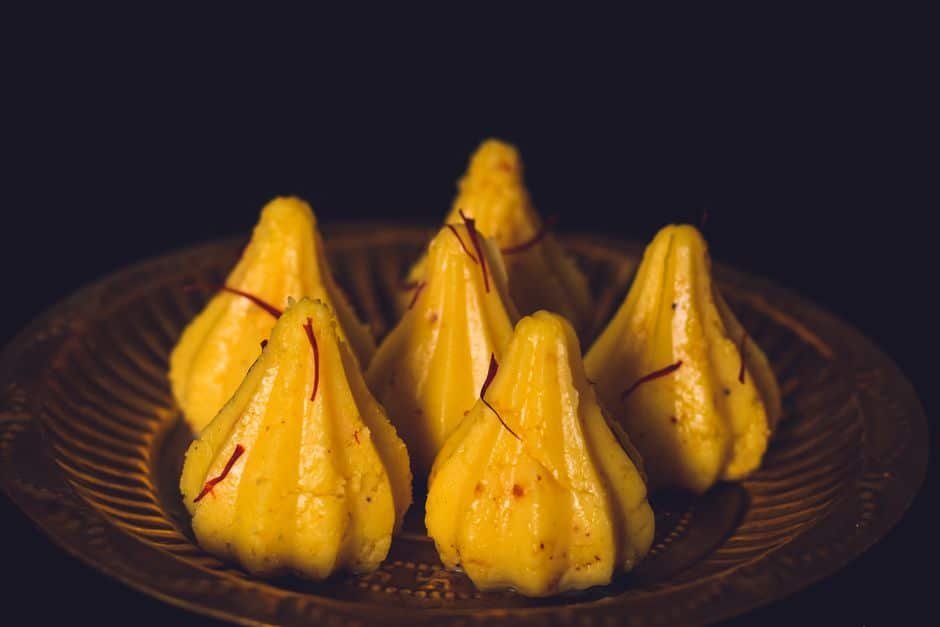
Modak is a steamed rice-flour dumpling filled with sweetened coconut and jaggery, most famous as Lord Ganesha's favourite offering during Ganesh Chaturthi. Its delicate pleated shape and soft texture make it one of Maharashtra's most beloved festive sweets.
Modak at a Glance
| Cuisine | Maharashtrian |
|---|---|
| Country | India |
| Meal | Dessert |
| Course | Dessert / Festival Sweet |
| Food Type | Vegetarian |
| Difficulty | Hard |
| Preparation | 20 minutes |
| Cooking | 30 minutes |
| Total time | About 50 minutes |
| Servings | 5 |
| Suggested serving | 2 modaks |
Modak Ingredients
- For dough: 1 cup rice flour; 1 cup water; 1/2 tsp ghee; a pinch of salt. For filling: 1.5 cups grated fresh coconut; 3/4 cup jaggery, grated; 1/2 tsp cardamom powder; 1 tbsp ghee.
How to Make Modak
- For the filling, heat ghee in a pan; add grated coconut and jaggery, and cook on low heat, stirring, until the jaggery melts and the mixture thickens and comes together, about 8-10 minutes.
- Add cardamom powder, mix well, and let the filling cool.
- For the dough, bring water, ghee and salt to a boil.
- Turn off the heat, add rice flour all at once, and stir quickly to combine.
- Cover and let it rest for 2-3 minutes, then knead while still warm into a smooth, soft, crack-free dough.
- Divide the dough into small balls; flatten each into a small disc, and shape into a cup using your fingers, keeping the edges thin.
- Fill with a spoonful of coconut-jaggery filling, then gather and pleat the edges upward to seal into the traditional modak shape.
- Steam the shaped modaks for 10-12 minutes until they turn slightly translucent and glossy.
Cooking Tips
Knead the rice flour dough while it's still warm — it hardens and cracks as it cools, making shaping difficult. Keep a bowl of water nearby to keep your hands moist while shaping, as rice flour dough dries out quickly. Steam just until the modaks turn glossy and translucent; overcooking can make them tough.
Variations
A simpler, no-steaming version uses a khoya-based filling shaped into modaks without further cooking, popular as an instant alternative. Add a few chopped nuts to the coconut-jaggery filling for extra texture.
Substitutions
Store-bought modak moulds make shaping easier for beginners than hand-pleating.
What to Serve With Modak
Serve warm or at room temperature with a drizzle of ghee, traditionally offered during Ganesh Chaturthi celebrations.
Storage & Reheating
Storage: Keeps refrigerated for 2 days; best enjoyed fresh on the day of preparation.
Reheating: Steam briefly for 2-3 minutes to soften and warm through.
Modak Nutrition Facts
Nutrition varies with exact ingredients, oil quantity and serving size. Approximate values per serving:
| Calories | 180 kcal |
|---|---|
| Protein | 3 g |
| Carbohydrates | 30 g |
| Fat | 6 g |
| Fiber | 3 g |
Values are estimates for planning purposes and should be treated as approximate.
Potential Nutritional Benefits
Uses jaggery instead of refined sugar, which retains some minerals, though it remains a sugar-based festive sweet best enjoyed occasionally.
Age & Serving Guidance
Suitable for toddlers from around 12 months onward in small soft pieces given the soft steamed texture, with the filling checked for choking-safe consistency.
For young children, take particular care with hot food, spice level, piece size, known allergies and individual chewing/swallowing ability.
Allergens & Food Safety
Allergens: Naturally gluten-free; contains coconut.
Ensure the dough is fully cooked and the shaped modaks are steamed through completely.
Modak FAQs
Why does my modak dough crack while shaping?
The dough has likely cooled too much; knead and shape while it's still warm, using slightly wet hands to keep it pliable.
Can I use a mould instead of hand-pleating?
Yes, store-bought modak moulds make shaping much easier, especially for beginners.
Why is my filling too watery?
Cook the coconut-jaggery mixture a little longer until it thickens and holds together, rather than remaining loose.
Can I make modak ahead of a festival?
They're best fresh, though you can refrigerate for up to 2 days and steam briefly to warm through before serving.
What is the difference between ukadiche modak and fried modak?
Ukadiche modak is steamed with a rice-flour outer shell, while fried modak uses a wheat-flour dough that's deep-fried, similar to a stuffed pastry.
Why did my modak turn out sticky?
This can happen if the dough had too much water; use just enough to bring it together into a smooth, non-sticky dough.
Can I make a simpler no-steam version?
Yes, a khoya or coconut-based mixture can be shaped directly into modak shapes without steaming, for a quicker alternative.
Is modak only made during Ganesh Chaturthi?
While it's traditionally associated with this festival, modak can be made and enjoyed any time as a coconut-jaggery sweet.
Helpful Resources
If you’re getting around Kuwait, check live routes, fares and timings on Kuwait Bus Route. And if you run a website or blog of your own, try these free SEO tools to check and improve it.
Desserts, Festival Recipes, Indian Sweets, Vegetarian Recipes — #Desserts #FestivalRecipes #IndianSweets #VegetarianRecipes