

Describe the importance of the physical layer
The physical layer is the lowest layer in the OSI (Open Systems Interconnection) model, and it plays a crucial role in network communication. Its importance lies in the fact that it is responsible for the actual transmission of raw data bits over a physical medium, such as copper wires, fiber optics, or wireless signals.
Key Reasons Why the Physical Layer Is Important:
- Transmission of Raw Data
- Converts data into electrical, optical, or radio signals.
- Ensures that binary 1s and 0s from higher layers are accurately transmitted as signals across the physical medium.
- Defines Hardware Specifications
- Specifies the physical characteristics of devices (e.g., cables, connectors, voltage levels, pin layouts, etc.).
- Determines how devices physically connect to each other.
- Determines Data Rate
- Establishes how many bits per second (bps) can be transmitted.
- Affects the speed and efficiency of communication.
- Signal Encoding and Transmission
- Handles modulation, encoding, and signaling methods.
- Determines how digital data is represented over the medium (e.g., NRZ, Manchester encoding).
- Physical Topology
- Dictates the layout of devices and cables (e.g., star, ring, bus topologies).
- Affects how devices are physically arranged and how signals flow.
- Error Detection and Synchronization Support
- Although error detection mainly happens in higher layers, the physical layer may influence signal quality and synchronization, which are critical for accurate data transfer.
- Foundation of the Entire Network Stack
- All higher-layer functions (like routing, encryption, or application services) depend on the physical layer for basic connectivity.
- Without a working physical layer, no communication is possible.
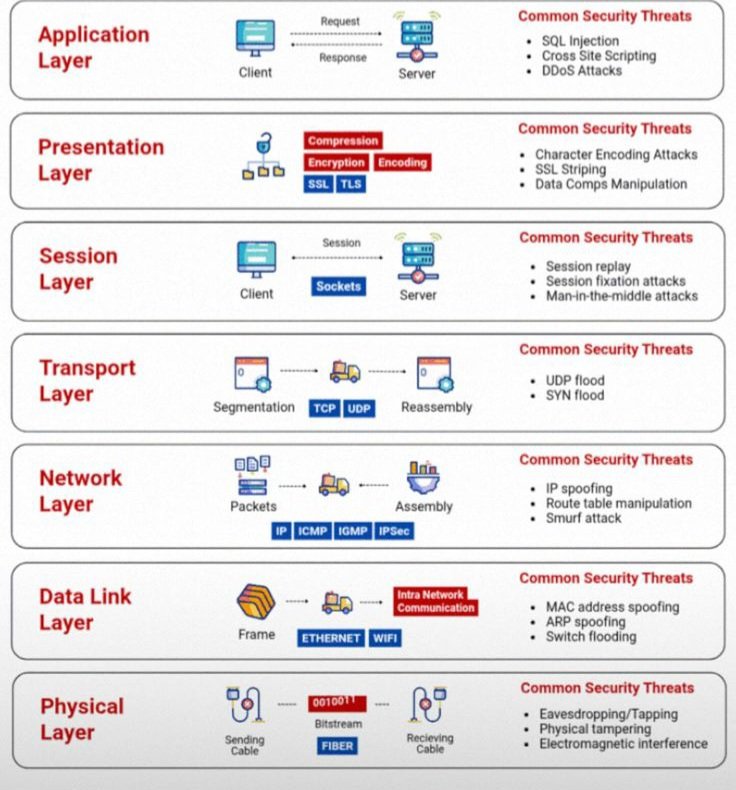
The physical layer is essential because it provides the infrastructure for communication. It enables computers and devices to connect and exchange data, making it the foundation upon which all other network functions are built. Even the most advanced protocols are useless without a reliable physical layer to carry their signals.
Stay Safe: How To Check If Someone Is Spying On Your Phone (2025 Guide iiQ8)
Describe the importance of the physical layer.
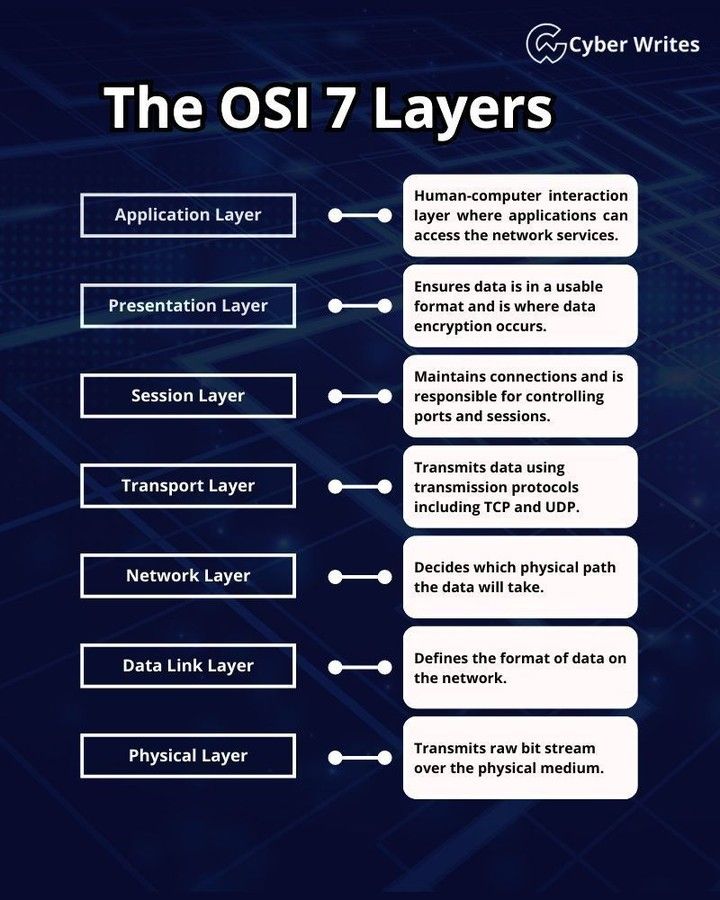
The physical layer, the lowest layer of the OSI model, is concerned with the transmission and reception of the unstructured raw bit stream over a physical medium. It describes the electrical / optical, mechanical, and functional interfaces to the physical medium, and carries the signals for all of the higher layers. It provides:
Data encoding: modifies the simple digital signal pattern (1s and 0s) used by the PC to better accommodate the characteristics of the physical medium, and to aid in bit and frame synchronization. It determines:
What signal state represents a binary 1
How the receiving station knows when a “bit-time” starts
How the receiving station delimits a frame
Physical medium attachment, accommodating various possibilities in the medium.
Transmission technique: determines whether the encoded bits will be transmitted by baseband (digital) or broadband (analog) signaling. Physical medium transmission: transmits bits as electrical or optical signals appropriate for the physical medium.
📌 Example Explanation (Brief)
Let’s say you’re interviewing for a network engineer, IT support, or computer science graduate role. You may be asked questions about the physical layer to assess your understanding of network fundamentals.
🔟 Top 10 Interview Questions & Sample Answers on the Physical Layer
- What is the physical layer in the OSI model?
Answer:
The physical layer is the lowest layer of the OSI model. It deals with the transmission of raw bits over a physical medium. It defines the hardware elements like cables, switches, voltage levels, signal timing, and connectors used in the communication.
- What are the main functions of the physical layer?
Answer:
The main functions include:
- Bit transmission
- Physical topology definition
- Signal encoding
- Data rate control
- Synchronization of bits
- Transmission medium selection
- Can you name some physical layer devices?
Answer:
Yes, examples include:
- Hubs
- Network cables (Ethernet, fiber optics)
- Repeaters
- Modems
- Connectors
- Network Interface Cards (NICs)
- What are the types of transmission media used in the physical layer?
Answer:
Transmission media can be:
- Guided: such as twisted pair cables, coaxial cables, and fiber optic cables.
- Unguided: such as wireless radio waves, microwaves, and infrared.
Kuwait Bus Route – Latest Bus Routes in Kuwait and Bus stops https://kuwaitbusroute.blogspot.com
- What is the difference between the physical layer and the data link layer?
Answer:
The physical layer transmits raw bits over a medium, while the data link layer is responsible for framing, addressing (MAC), and error detection. The physical layer is hardware-based, whereas the data link layer is more software-based.
- How does the physical layer impact network performance?
Answer:
It determines the data rate, signal quality, and error rates. Poor cables or interference can degrade performance. The layer’s characteristics like bandwidth, transmission mode, and noise resistance directly affect network speed and reliability.
- What is signal attenuation in the physical layer?
Answer:
Signal attenuation refers to the weakening of a signal as it travels over a distance through a transmission medium. This can cause data loss or corruption and may require repeaters to amplify the signal.
- What is modulation in the context of the physical layer?
Answer:
Modulation is the process of converting digital signals into analog signals (or vice versa) so that data can be transmitted over different types of media, especially in wireless or long-distance communication.
- Explain the role of a repeater in the physical layer.
Answer:
A repeater is a physical layer device that regenerates and amplifies signals to extend the distance over which data can be transmitted without degradation or loss.
- What is the difference between full-duplex and half-duplex transmission?
Answer:
- Full-duplex: Data can be sent and received simultaneously (e.g., telephone).
- Half-duplex: Data can be sent and received, but not at the same time (e.g., walkie-talkies).
- Always relate the physical layer to real-world hardware and media.
- Mention practical examples like cables, NICs, and repeaters.
- Be clear and concise — don’t confuse it with higher OSI layers.
Easy Trick to remember the OSI layers : Short cut to easy mind
All
People
Seem
To
Need
Data
Processing
Or
Please
Do
Not
Throw
Sausage
Pizza
Away