

8 Ramayana Historical Sites and Traditions: Ram Setu, Ashok Vatika, Sigiriya and Lepakshi
The Ramayana Historical Sites is one of India’s most influential epics, inspiring generations through its stories of Lord Rama, Goddess Sita, Lord Hanuman, Lakshmana, Jatayu and Ravana. Across India and Sri Lanka, several geographical locations, temples, rock formations and local traditions are associated with events described in the epic.
Among the most widely discussed places are Ram Setu, the landscapes associated with Ashok Vatika, Sigiriya Rock Fortress, Kanniya hot springs and Lepakshi Temple. These locations attract devotees, travellers, researchers and history enthusiasts who wish to explore the relationship between the Ramayana and the physical landscape.
This article presents eight places and traditions associated with the Ramayana, preserving the images from the original article while adding historical context. It is important to distinguish between religious belief, local tradition, archaeological records and scientifically established conclusions. A place can hold deep cultural and spiritual importance even when a particular connection to an ancient epic has not been conclusively demonstrated by archaeological evidence.
📌 In this article
- Ram Setu or Adam’s Bridge
- The proposed Pushpaka Vimana route
- Footprints associated with Lord Hanuman
- Ashok Vatika and Nuwara Eliya
- Sigiriya Rock Fortress
- The Cobra Hood Cave inscription
- Kanniya hot water springs
- Lepakshi Temple and the Jatayu legend

1. Ram Setu – The Bridge Between India and Sri Lanka
Ram Setu, also known as Rama’s Bridge or Adam’s Bridge, is a chain of shallow limestone shoals and sandbanks extending between India’s Pamban Island, near Rameswaram, and Mannar Island in Sri Lanka. It stretches for approximately 48 kilometres and is clearly visible in satellite imagery.
In the Ramayana tradition, Lord Rama’s army, commonly described as the Vanara Sena, built a bridge to reach Lanka and rescue Goddess Sita from Ravana. For devotees, the geographical formation is closely associated with this episode and holds considerable religious significance.
Satellite images from NASA and other Earth-observation organisations show the physical formation. However, a satellite image alone cannot establish that the formation was constructed by Lord Rama’s army. The European Space Agency describes Adam’s Bridge as a chain of shoals and discusses geological explanations for its formation. Scientific research continues to investigate its geomorphology and geological history.
It is therefore useful to distinguish two questions: the existence of the geographical formation is observable, while its precise relationship to the events described in the Ramayana is a separate historical and religious question.
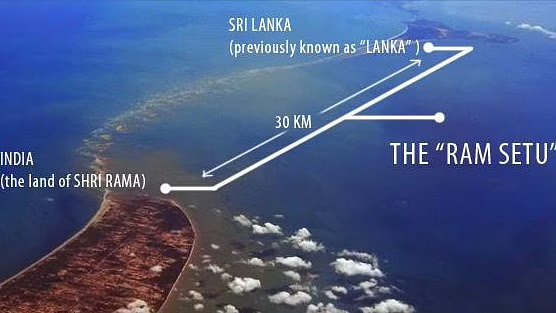
Further reading: European Space Agency: Earth from Space – Adam’s Bridge | USGS Landsat image of Rama’s Bridge.
2. The Proposed Pushpaka Vimana Route
The Pushpaka Vimana is an important element in traditional accounts of the Ramayana. It is described in the epic as a remarkable flying vehicle associated with Ravana and later with Lord Rama.
Some modern online accounts propose a route connecting Nashik, Hampi, Lepakshi and Sri Lanka. They point to the geographical coordinates of these locations and suggest that their alignment is connected to the movements of characters in the epic.
However, the coordinates listed in the original version of this article do not, by themselves, establish a historical flight route. To demonstrate that a particular route was used, researchers would need independent evidence, a reliable method for reconstructing the route and historical or archaeological support. A visual alignment on a map is not sufficient proof.
These locations can still be explored for their religious traditions, temples, landscapes and cultural associations. Readers should treat the proposed Pushpaka Vimana route as an interpretation rather than a scientifically confirmed flight path.
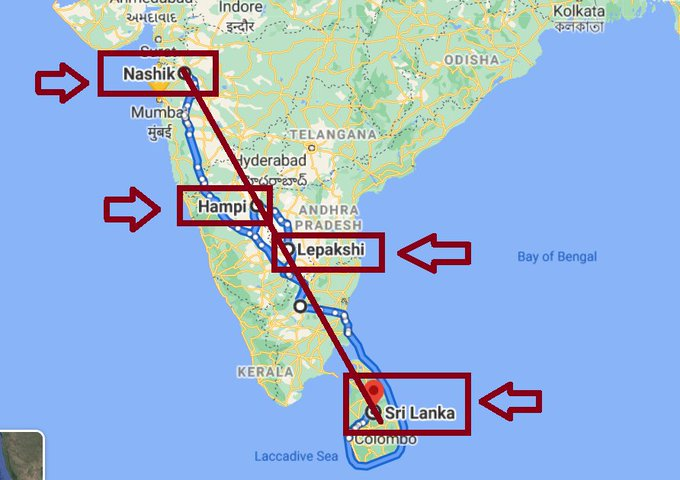
Locations mentioned in the original article:
- Nashik, Maharashtra
- Hampi, Karnataka
- Lepakshi, Andhra Pradesh
- Sri Lanka
3. Footprints Associated with Lord Hanuman
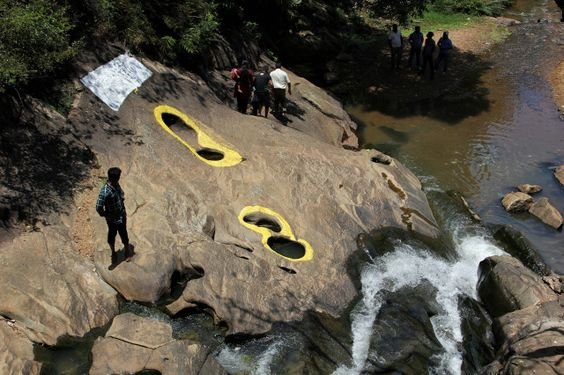
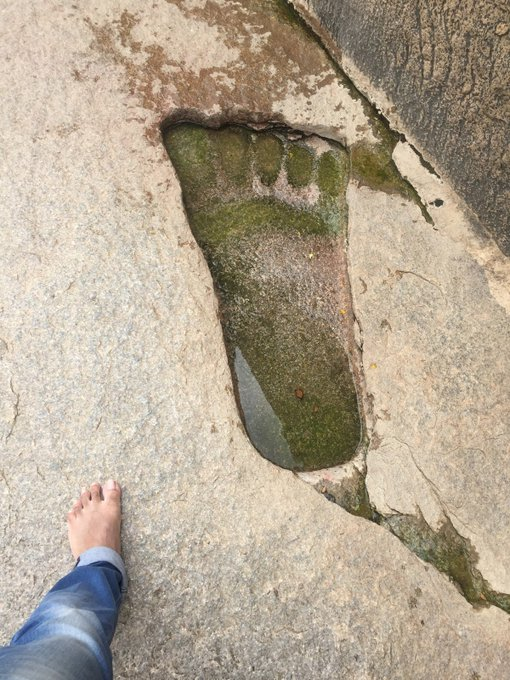
Footprints believed by devotees to be associated with Lord Hanuman are found at several religious sites in India and Sri Lanka. In the Ramayana, Hanuman plays a central role in searching for Goddess Sita, travelling to Lanka and helping Lord Rama in the struggle against Ravana.
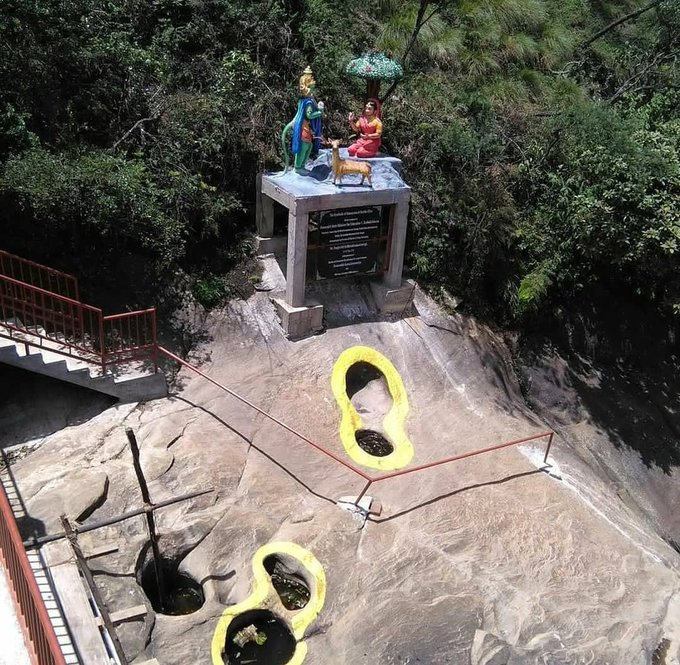
Some local traditions identify large marks on rocks as Hanuman’s footprints. Their religious meaning may be an important part of local worship and pilgrimage, and such sites can provide insight into the ways communities preserve and express their beliefs.
Nevertheless, a footprint-shaped mark in stone cannot be attributed to a particular person or mythological figure through appearance alone. Its origin would need to be assessed through appropriate geological, archaeological and historical methods.
Ramayana historical sites, Ram Setu history, Ram Setu NASA images, Ashok Vatika Sri Lanka, Pushpaka Vimana route, Hanuman footprints Sri Lanka, Sigiriya Ravana connection, Cobra Hood Cave inscription, Kanniya hot water springs, Lepakshi Jatayu story, Ramayana places in Sri Lanka, రామాయణ ప్రదేశాలు, రామసేతు చరిత్ర
4. Ashok Vatika – The Tradition of Sita’s Garden
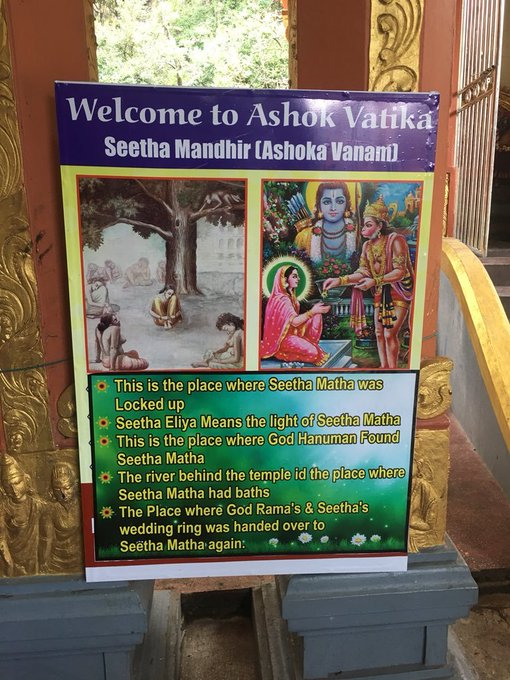
Ashok Vatika is remembered in the Ramayana as the garden where Goddess Sita was held after Ravana took her to Lanka. In the epic’s narrative, Hanuman eventually finds Sita there and delivers Lord Rama’s message to her.
Several places in Sri Lanka are associated with this episode through local traditions and modern Ramayana pilgrimage routes. The area around Seetha Eliya, near Nuwara Eliya, is particularly well known among devotees. The Sita Amman Temple there is linked by local tradition to Sita’s story.
Sri Lanka’s official tourism website describes the legends associated with various Ramayana-related locations, including sites connected to Sita and Hanuman. These accounts are useful for understanding local religious traditions, but they should not automatically be interpreted as archaeological confirmation of every event described in the epic.
The landscape, temples and pilgrimage practices around these locations remain significant to visitors interested in Hindu traditions and the cultural heritage of Sri Lanka.
Further reading: Sri Lanka Tourism – Ramayanaya places and traditions.
5. Sigiriya Rock Fortress – History and the Ravana Tradition
Sigiriya, also known as Lion Rock, is one of Sri Lanka’s most famous archaeological and cultural landmarks. Its dramatic rock formation rises above the surrounding landscape and contains the remains of an ancient royal complex, including gardens, water features, defensive structures and paintings.
According to Sri Lanka’s tourism authorities, King Kashyapa established a royal centre at Sigiriya in the fifth century CE. The site is internationally recognised for its historical and archaeological importance and was inscribed on the UNESCO World Heritage List in 1982.
Some popular Ramayana-related interpretations connect Sigiriya with Ravana’s kingdom or the idea of a magnificent palace. Such associations form part of modern discussions and local interpretations of the epic. However, the established archaeological history of Sigiriya identifies it with King Kashyapa and the ancient royal city; the claim that it was Ravana’s golden palace has not been established by the archaeological evidence cited here.
Visitors can appreciate Sigiriya both as a remarkable historic monument and as a place that has inspired stories, interpretations and cultural imagination.


Further reading: Sri Lanka Tourism – Sigiriya Rock Fortress and City.
6. Cobra Hood Cave – An Inscription at Sigiriya
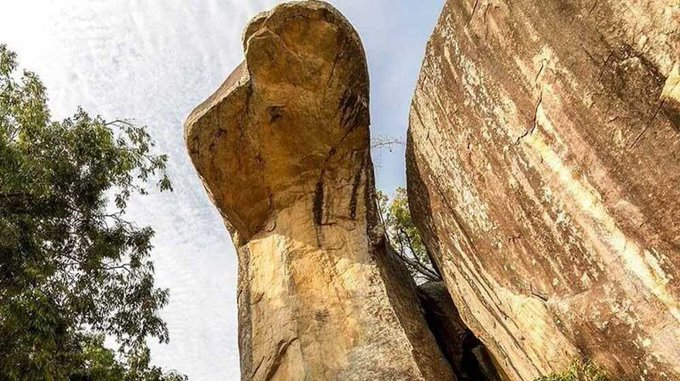
The Cobra Hood Cave, part of the wider Sigiriya archaeological landscape, is known for its distinctive rock formation and ancient inscriptions. It is one of the features that makes the site valuable to historians and visitors interested in Sri Lanka’s past.
The original article mentions an inscription transcribed as “Parumaka Naguliya Lena” and suggests that the word “Naguli” refers to Goddess Sita. That interpretation should be treated cautiously unless it is supported by a reliable epigraphic study, translation and historical context.
Inscriptions are valuable sources of historical information, but their meaning depends on the language, script, date, context and scholarly interpretation. A resemblance between a word in an inscription and a name used in an epic is not enough on its own to establish a connection.
Sigiriya’s inscriptions and rock shelters are worth studying as part of the documented archaeological heritage of Sri Lanka, while specific interpretations linking them to the Ramayana require independent evidence.
7. Kanniya Hot Water Springs – A Local Tradition Connected to Ravana
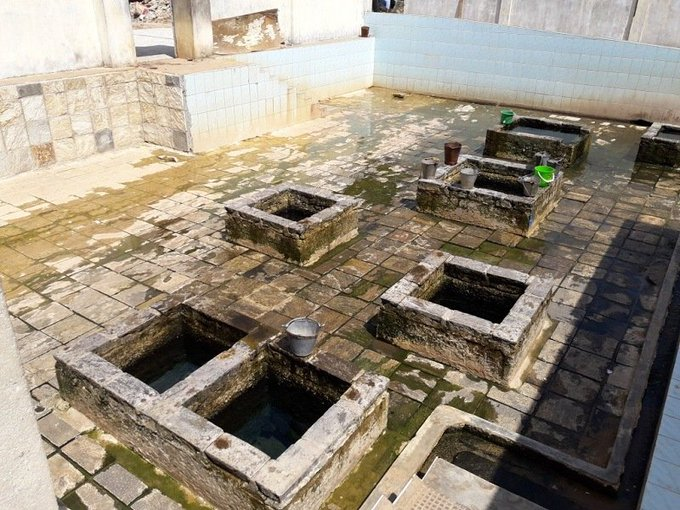
Kanniya, near Trincomalee in Sri Lanka, is known for its group of hot water wells. The site is associated with a local tradition involving Ravana and the performance of religious rites for his mother.
According to the legend, Ravana needed water for the rites and struck the ground with his trident, causing water to emerge. The wells are therefore connected to the Ravana tradition in local storytelling and pilgrimage.
The existence of the hot water wells is a physical feature that visitors can observe. Their temperature and geological origin are separate from the traditional explanation of how they came into being. The legend should be presented as cultural and religious tradition rather than as a scientifically demonstrated account of the springs’ formation.
Kanniya is an example of how local landscapes can become intertwined with epic narratives and continue to hold significance for communities and pilgrims.
Further reading: Sri Lanka Tourism – Ramayana-related places, including Kanniya.
8. Lepakshi Temple – The Legend of Jatayu
Lepakshi, in Andhra Pradesh, is renowned for its Veerabhadra Temple, intricate sculptures, murals, monolithic Nandi statue and famous hanging pillar. The temple complex is an important example of the art and architecture associated with the Vijayanagara period.
According to the Ramayana tradition, Jatayu fought Ravana while trying to rescue Goddess Sita. The bird was wounded and fell to the ground. A popular legend connects this episode to Lepakshi, where Lord Rama is said to have addressed the bird with the words “Le Pakshi,” often interpreted as “Rise, bird” in Telugu.
India’s official tourism website describes this legend while also discussing the temple’s historical background. The site’s inscriptions and architecture provide evidence of its documented history, while the Jatayu episode remains a religious and cultural tradition associated with the location.
Lepakshi is therefore an excellent example of how a historical monument can bring together architectural heritage, religious devotion, local storytelling and epic tradition.
Further reading: Incredible India – Lepakshi Temple | UNESCO – Lepakshi Temple and Vijayanagara art.

What Do These Eight Places Tell Us?
These eight examples show several different ways in which the Ramayana continues to influence geography, pilgrimage, local traditions and cultural identity.
- Geographical features: Ram Setu is a real chain of shoals that can be studied through satellite imagery and geology.
- Archaeological heritage: Sigiriya and Lepakshi contain historical structures, inscriptions, artwork and other material remains.
- Religious traditions: Sites associated with Sita, Hanuman, Ravana and Jatayu remain meaningful to devotees.
- Local legends: Places such as Kanniya are linked to stories passed down through communities.
- Historical research: Archaeology, geology, inscriptions and reliable written records help researchers evaluate particular claims.
These categories should not be confused. The existence of a place is not automatically proof of every story associated with it, and the absence of conclusive archaeological confirmation does not erase the site’s religious or cultural significance.
Frequently Asked Questions (FAQs)
1. Is Ram Setu a real geographical formation?
Yes. Ram Setu, also known as Adam’s Bridge, is a chain of shallow shoals between India and Sri Lanka, documented in Earth-observation imagery. The origin and geological history of the formation are scientific questions distinct from its religious interpretation.
2. Do NASA images prove that Lord Rama’s army built Ram Setu?
No. Satellite images show the geographical formation, but an image alone cannot establish who built it or confirm the events described in the Ramayana. Such claims require independent historical, archaeological and geological evidence.
3. Is Sigiriya confirmed to be Ravana’s palace?
Sigiriya is an established archaeological site associated with the fifth-century reign of King Kashyapa. The identification of Sigiriya as Ravana’s palace is a Ramayana-related interpretation, not an established conclusion of the archaeological evidence cited in this article.
4. Where is Ashok Vatika traditionally associated with Sita?
Several places in Sri Lanka are connected with the Ashok Vatika story through local traditions. The area around Seetha Eliya and the Sita Amman Temple near Nuwara Eliya is particularly well known among Ramayana pilgrims.
5. What is the connection between Lepakshi and Jatayu?
A popular legend connects Lepakshi with the episode in which Jatayu falls after fighting Ravana. The temple itself is also an important historical and architectural monument associated with the Vijayanagara period.
6. Why are these places important to devotees?
These locations connect religious narratives with landscapes, temples, pilgrimage practices and community traditions. Their spiritual and cultural value can be important regardless of whether every associated event has been independently verified by archaeology.
Conclusion: Exploring the Ramayana Through Places and Traditions
The Ramayana has shaped art, literature, worship and cultural traditions across South Asia for centuries. Ram Setu, Sigiriya, Kanniya, the areas associated with Ashok Vatika and Lepakshi each offer a different way to explore the relationship between the epic and the places people associate with it.
For readers interested in history, the most rewarding approach is to examine archaeological records, geological research, inscriptions and official heritage information alongside religious and local traditions. This allows us to appreciate both the depth of the Ramayana’s cultural legacy and the importance of careful historical investigation.
Jai Shri Ram! 🙏
References and Further Reading
- European Space Agency – Adam’s Bridge satellite imagery and geological context
- United States Geological Survey – Landsat image of Rama’s Bridge
- Sri Lanka Tourism – Sigiriya Rock Fortress and City
- Sri Lanka Tourism – Ramayanaya pilgrimage places and local legends
- Incredible India – Lepakshi Temple
- UNESCO World Heritage Centre – Lepakshi Temple
Editorial note: This article discusses religious traditions and historical interpretations. Claims presented as legends or local beliefs should not be read as conclusive archaeological proof. Readers are encouraged to consult primary historical, archaeological and scientific sources for further study.
Tags: Ramayana historical sites, Ram Setu, Adam’s Bridge, Ashok Vatika, Pushpaka Vimana, Hanuman footprints, Sigiriya Rock Fortress, Cobra Hood Cave, Kanniya hot springs, Lepakshi Temple, Jatayu story, Ramayana places in Sri Lanka, Ramayana history
రామాయణానికి సంబంధించిన 8 ప్రదేశాలు – తెలుగు వ్యాసం
రామాయణం భారతీయ సంస్కృతి, ఆధ్యాత్మికత, సాహిత్యం మరియు సంప్రదాయాలపై గొప్ప ప్రభావాన్ని చూపిన ఇతిహాసం. శ్రీరాముడు, సీతమ్మ, హనుమంతుడు, లక్ష్మణుడు, జటాయువు, రావణుడు వంటి పాత్రలతో ముడిపడిన అనేక కథలు తరతరాలుగా ప్రజలలో ప్రాచుర్యం పొందాయి.
భారతదేశం మరియు శ్రీలంకలోని కొన్ని ప్రదేశాలు రామాయణంలోని సంఘటనలతో సంబంధం కలిగి ఉన్నాయని స్థానిక సంప్రదాయాలు చెబుతున్నాయి. రామసేతు, అశోకవాటికగా భావించే ప్రాంతాలు, సిగిరియా, కన్నయ్య వేడి నీటి బుగ్గలు, లేపాక్షి ఆలయం వాటిలో ముఖ్యమైనవి.
ముఖ్యమైన గమనిక: మతపరమైన విశ్వాసం, స్థానిక కథనం, చారిత్రక ఆధారం, శాస్త్రీయంగా నిర్ధారించబడిన విషయం – ఇవన్నీ ఒకే అర్థం కావు. ఈ వ్యాసంలో సంప్రదాయ కథనాలను గౌరవిస్తూ, నిర్ధారించబడిన చారిత్రక సమాచారాన్ని వాటి నుంచి వేరుగా వివరించాము.
1. రామసేతు
రామసేతు లేదా ఆడమ్స్ బ్రిడ్జ్ అనేది భారతదేశంలోని పంబన్ ద్వీపం, శ్రీలంకలోని మన్నార్ ద్వీపం మధ్య ఉన్న ఇసుక దిబ్బలు, సున్నపురాయి మడుగుల శ్రేణి. రామాయణ సంప్రదాయం ప్రకారం, వానరసేన లంకకు చేరడానికి శ్రీరాముని కోసం వంతెన నిర్మించింది. ఉపగ్రహ చిత్రాలలో ఈ భౌగోళిక నిర్మాణం కనిపిస్తుంది. అయితే, ఉపగ్రహ చిత్రాలు మాత్రమే దీనిని రామాయణంలో చెప్పిన విధంగా నిర్మించారని నిరూపించవు. దాని భౌగోళిక చరిత్రను శాస్త్రీయ పరిశోధనలతో అధ్యయనం చేస్తారు.
2. పుష్పక విమాన మార్గం
రామాయణ కథనాల్లో పుష్పక విమానానికి ప్రత్యేక స్థానం ఉంది. నాసిక్, హంపి, లేపాక్షి, శ్రీలంక వంటి ప్రదేశాలను కలిపి ఒక మార్గంగా చూపించే కొన్ని ఆధునిక కథనాలు ఉన్నాయి. అయితే, ప్రదేశాల అక్షాంశాలు, రేఖాంశాలు ఒక నిర్దిష్ట మార్గాన్ని సూచిస్తున్నాయని మాత్రమే చెప్పడం ద్వారా ఆ మార్గం చారిత్రకంగా నిర్ధారించబడదు. ఈ వాదనను నిరూపించడానికి స్వతంత్ర చారిత్రక ఆధారాలు అవసరం.
3. హనుమంతుని పాదముద్రలుగా భావించే గుర్తులు
భారతదేశం, శ్రీలంకలోని కొన్ని ప్రదేశాల్లో రాళ్లపై కనిపించే పాదముద్రలను భక్తులు హనుమంతునితో సంబంధం ఉన్నవిగా భావిస్తారు. ఇవి స్థానిక మతపరమైన సంప్రదాయాల్లో ప్రాముఖ్యతను కలిగి ఉండవచ్చు. అయితే, రాయిపై కనిపించే గుర్తు ఆధారంగా అది ఒక నిర్దిష్ట వ్యక్తి లేదా ఇతిహాస పాత్రకు చెందినదని శాస్త్రీయంగా నిర్ధారించలేము.
4. అశోకవాటిక
రామాయణం ప్రకారం, రావణుడు సీతమ్మను లంకకు తీసుకెళ్లిన తర్వాత అశోకవాటికలో ఉంచాడు. శ్రీలంకలోని నువారా ఎలియా సమీపంలోని సీతా ఎలియా ప్రాంతం, సీతా అమ్మన్ ఆలయం ఈ సంప్రదాయంతో సంబంధం కలిగి ఉన్నాయని భక్తులు విశ్వసిస్తారు. శ్రీలంక పర్యాటక శాఖ కూడా రామాయణంతో సంబంధం ఉన్న అనేక ప్రదేశాల స్థానిక కథనాలను పరిచయం చేస్తుంది. అయితే, ఈ సంప్రదాయాలను ప్రతి సంఘటనకు నిర్ధారిత పురావస్తు ఆధారాలుగా భావించకూడదు.
5. సిగిరియా రాతి కోట
శ్రీలంకలోని సిగిరియా ప్రసిద్ధ పురావస్తు ప్రదేశం. ఇక్కడ పురాతన రాజభవనం, ఉద్యానవనాలు, నీటి నిర్మాణాలు, రక్షణ గోడలు, చిత్రాలు ఉన్నాయి. శ్రీలంక పర్యాటక శాఖ ప్రకారం, ఐదవ శతాబ్దంలో రాజు కశ్యపుడు ఇక్కడ రాజకేంద్రాన్ని నిర్మించాడు. సిగిరియాను రావణుడి బంగారు ప్యాలెస్గా భావించే కొన్ని రామాయణ సంబంధిత వ్యాఖ్యానాలు ఉన్నప్పటికీ, ఆ గుర్తింపు పురావస్తు ఆధారాలతో నిర్ధారించబడలేదు.
6. కోబ్రా హుడ్ గుహ
సిగిరియా ప్రాంతంలోని కోబ్రా హుడ్ గుహ దాని ప్రత్యేకమైన రాతి ఆకారం, శాసనాల కారణంగా ప్రసిద్ధి చెందింది. అసలు వ్యాసంలో పేర్కొన్న శాసనంలోని పదాలు సీతమ్మను సూచిస్తాయని ఒక వ్యాఖ్యానం ఉంది. అయితే, శాసనాల అర్థాన్ని నిర్ధారించడానికి భాష, లిపి, కాలం, చారిత్రక సందర్భం మరియు నిపుణుల పరిశోధన అవసరం. ఒక పదం పోలిక ఆధారంగా మాత్రమే దానిని రామాయణంలోని పాత్రతో అనుసంధానించలేము.
7. కన్నయ్య వేడి నీటి బుగ్గలు
శ్రీలంకలోని త్రింకోమలీ సమీపంలో కన్నయ్య వేడి నీటి బావులు ఉన్నాయి. స్థానిక కథనం ప్రకారం, రావణుడు తన తల్లికి సంబంధించిన కర్మలు నిర్వహించడానికి నీరు అవసరమైనప్పుడు త్రిశూలంతో నేలను కొట్టగా నీరు ఉద్భవించిందని చెబుతారు. ఈ కథ స్థానిక సంప్రదాయంలో ప్రాముఖ్యత కలిగి ఉంది. అయితే, బుగ్గల ఉనికి ఒక భౌతిక వాస్తవం కాగా, అవి ఎలా ఏర్పడ్డాయన్నది భౌగోళిక పరిశోధనకు సంబంధించిన ప్రత్యేక ప్రశ్న.
8. లేపాక్షి ఆలయం – జటాయువు కథ
ఆంధ్రప్రదేశ్లోని లేపాక్షి వీరభద్ర ఆలయం శిల్పాలు, చిత్రాలు, ఏకశిలా నంది, ప్రసిద్ధ వేలాడే స్తంభం కోసం పేరుపొందింది. రామాయణ సంప్రదాయం ప్రకారం, సీతమ్మను రావణుడు తీసుకెళ్తున్నప్పుడు జటాయువు అతనితో యుద్ధం చేసి గాయపడి పడిపోయాడు. ఈ సంఘటనను లేపాక్షితో అనుసంధానించే స్థానిక కథనం ఉంది. ఆలయానికి సంబంధించిన చారిత్రక శాసనాలు, కళా సంపద దాని చరిత్రకు ఆధారాలు కాగా, జటాయువు కథ మతపరమైన మరియు సాంస్కృతిక సంప్రదాయంగా చెప్పబడుతుంది.
ముగింపు
రామాయణంతో సంబంధం ఉన్న ఈ ప్రదేశాలు భౌగోళిక నిర్మాణాలు, పురావస్తు సంపద, ఆలయాలు, స్థానిక విశ్వాసాలు, యాత్రా సంప్రదాయాల మధ్య ఉన్న సంబంధాన్ని అర్థం చేసుకోవడానికి సహాయపడతాయి. మతపరమైన విశ్వాసాలను గౌరవిస్తూనే, చారిత్రక వాదనలను పరిశీలించడానికి పురావస్తు, భూగర్భశాస్త్రం, శాసనాలు, విశ్వసనీయ చారిత్రక ఆధారాలను ఉపయోగించడం మంచిది.
జై శ్రీరామ్! 🙏
रामायण से जुड़े 8 स्थान और परंपराएँ – हिंदी लेख
रामायण भारतीय संस्कृति और आध्यात्मिक परंपरा का एक महत्वपूर्ण महाकाव्य है। भारत और श्रीलंका के कई स्थान स्थानीय मान्यताओं और धार्मिक परंपराओं के माध्यम से रामायण की घटनाओं से जुड़े हुए हैं। इनमें राम सेतु, अशोक वाटिका से संबंधित स्थान, सिगिरिया, कन्निया के गर्म जलस्रोत और लेपाक्षी मंदिर प्रमुख हैं।
महत्वपूर्ण बात: धार्मिक आस्था, स्थानीय किंवदंती, ऐतिहासिक दस्तावेज और वैज्ञानिक प्रमाण अलग-अलग प्रकार की जानकारी हैं। किसी स्थान का धार्मिक महत्व अपने आप में महत्वपूर्ण है, लेकिन उससे जुड़ी प्रत्येक कथा को पुरातात्विक रूप से प्रमाणित इतिहास नहीं माना जा सकता।
1. राम सेतु
राम सेतु, जिसे एडम्स ब्रिज भी कहा जाता है, भारत के पंबन द्वीप और श्रीलंका के मन्नार द्वीप के बीच उथले जल में स्थित रेत के टीलों और चूना-पत्थर की संरचनाओं की एक श्रृंखला है। रामायण की परंपरा में इसे भगवान राम की सेना द्वारा लंका तक पहुँचने के लिए बनाए गए पुल से जोड़ा जाता है। उपग्रह चित्र इस भौगोलिक संरचना को दिखाते हैं, लेकिन केवल चित्रों से यह सिद्ध नहीं होता कि इसे रामायण में वर्णित तरीके से बनाया गया था।
2. पुष्पक विमान का प्रस्तावित मार्ग
कुछ लोकप्रिय लेख नासिक, हम्पी, लेपाक्षी और श्रीलंका को पुष्पक विमान की कथित यात्रा से जोड़ते हैं। लेकिन मानचित्र पर स्थानों की स्थिति या निर्देशांक अपने आप में किसी ऐतिहासिक उड़ान मार्ग का प्रमाण नहीं हैं। ऐसे दावों की पुष्टि के लिए स्वतंत्र ऐतिहासिक और पुरातात्विक प्रमाण आवश्यक हैं।
3. हनुमान जी के माने जाने वाले पदचिह्न
भारत और श्रीलंका के कुछ धार्मिक स्थलों पर चट्टानों के निशानों को भक्त हनुमान जी के पदचिह्न मानते हैं। ये स्थानीय धार्मिक परंपराओं के लिए महत्वपूर्ण हो सकते हैं। हालांकि, किसी चट्टान पर दिखाई देने वाले निशान को केवल उसके आकार के आधार पर किसी विशेष व्यक्ति या पौराणिक पात्र से जोड़ना वैज्ञानिक रूप से पर्याप्त नहीं है।
4. अशोक वाटिका
रामायण के अनुसार, रावण सीता माता को लंका ले जाने के बाद अशोक वाटिका में रखता है। श्रीलंका में नुवारा एलिया के पास सीता एलिया और सीता अम्मन मंदिर को इस कथा से जोड़ा जाता है। ये स्थान रामायण से संबंधित तीर्थ-परंपराओं में महत्वपूर्ण हैं, हालांकि इनकी पहचान को हर घटना के निर्णायक पुरातात्विक प्रमाण के रूप में नहीं देखना चाहिए।
5. सिगिरिया रॉक फोर्ट्रेस
सिगिरिया श्रीलंका का एक प्रसिद्ध ऐतिहासिक और पुरातात्विक स्थल है। यहाँ प्राचीन राजकीय परिसर, बगीचे, जल संरचनाएँ और चित्रकला के अवशेष हैं। श्रीलंका के पर्यटन स्रोत इसे पाँचवीं शताब्दी में राजा कश्यप से जोड़ते हैं। इसे रावण का स्वर्ण महल मानने वाली कुछ लोकप्रिय व्याख्याएँ मौजूद हैं, लेकिन यह पहचान उपलब्ध पुरातात्विक प्रमाणों से स्थापित नहीं है।
6. कोबरा हूड गुफा
सिगिरिया क्षेत्र की कोबरा हूड गुफा अपनी चट्टानी बनावट और शिलालेखों के लिए जानी जाती है। मूल लेख में एक शिलालेख के शब्दों को सीता माता से जोड़ने की व्याख्या दी गई है। ऐसी व्याख्या की पुष्टि के लिए लिपि, भाषा, समय और ऐतिहासिक संदर्भ का विशेषज्ञ अध्ययन आवश्यक है।
7. कन्निया के गर्म जलस्रोत
श्रीलंका के त्रिंकोमाली क्षेत्र के पास कन्निया गर्म जल के कुओं के लिए प्रसिद्ध है। स्थानीय कथा के अनुसार, रावण ने अपनी माता के अंतिम संस्कार संबंधी अनुष्ठान के लिए पानी प्राप्त करने हेतु जमीन पर त्रिशूल मारा था, जिससे पानी निकला। यह एक स्थानीय धार्मिक परंपरा है; जलस्रोतों की वास्तविक भूवैज्ञानिक उत्पत्ति एक अलग वैज्ञानिक विषय है।
8. लेपाक्षी मंदिर और जटायु की कथा
आंध्र प्रदेश का लेपाक्षी वीरभद्र मंदिर अपनी मूर्तिकला, चित्रों, विशाल नंदी और प्रसिद्ध लटकते स्तंभ के लिए जाना जाता है। एक लोकप्रिय रामायण कथा के अनुसार, सीता माता को बचाने के प्रयास में रावण से लड़ते हुए जटायु यहाँ गिरे थे। यह स्थान जटायु की कथा से स्थानीय परंपरा में जुड़ा है, जबकि मंदिर की वास्तुकला और शिलालेख उसके ऐतिहासिक महत्व के प्रमाण हैं।
निष्कर्ष
रामायण से जुड़े ये स्थान धार्मिक आस्था, स्थानीय कथाओं, भौगोलिक विशेषताओं और ऐतिहासिक धरोहर के बीच संबंध दिखाते हैं। रामायण की सांस्कृतिक विरासत को समझने के लिए धार्मिक परंपराओं का सम्मान करना और ऐतिहासिक दावों का मूल्यांकन विश्वसनीय पुरातात्विक, भूवैज्ञानिक और लिखित स्रोतों के आधार पर करना दोनों महत्वपूर्ण हैं।
जय श्री राम! 🙏
Hindi Tags: रामायण के ऐतिहासिक स्थल, राम सेतु, अशोक वाटिका, पुष्पक विमान, हनुमान पदचिह्न, सिगिरिया, कन्निया गर्म जलस्रोत, लेपाक्षी मंदिर, जटायु की कथा
Ramayana historical sites, Ram Setu history, Ram Setu NASA images, Ashok Vatika Sri Lanka, Pushpaka Vimana route, Hanuman footprints Sri Lanka, Sigiriya Ravana connection, Cobra Hood Cave inscription, Kanniya hot water springs, Lepakshi Jatayu story, Ramayana places in Sri Lanka, రామాయణ ప్రదేశాలు, రామసేతు చరిత్ర
When is Holi 2027? Date, Puja Timings, History and Significance of the Festival of Colours