

Poha Recipe: Easy Maharashtrian Poha | Quick Indian Breakfast Recipe
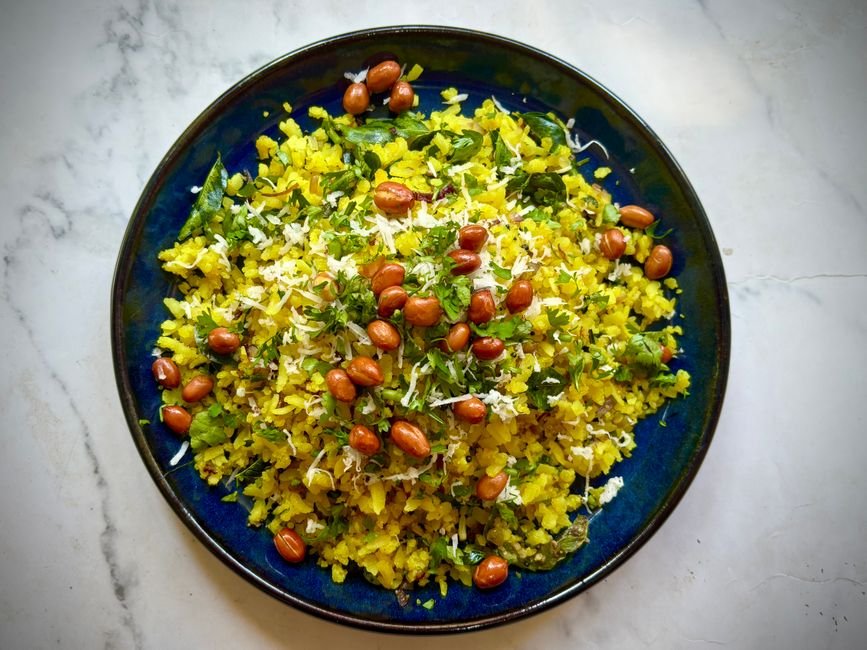
Poha Recipe is a light, tangy Maharashtrian breakfast made from flattened rice, quickly stir-fried with onions, curry leaves, mustard seeds and peanuts. It’s one of the fastest Indian breakfasts to prepare, ready in about 15 minutes, and a common choice for busy weekday mornings.
Poha at a Glance
| Cuisine | Maharashtrian |
|---|---|
| Country | India |
| Meal | Breakfast |
| Course | Main / Breakfast |
| Food Type | Vegan |
| Difficulty | Easy |
| Preparation | 10 minutes |
| Cooking | 10 minutes |
| Total time | About 20 minutes |
| Servings | 3 |
| Suggested serving | 1 cup |
Poha Recipe Ingredients
- 2 cups thick poha (flattened rice);
- 1 small onion, finely chopped;
- 1 green chilli, finely chopped;
- a few curry leaves;
- 1/2 tsp mustard seeds;
- a pinch of turmeric;
- 2 tbsp peanuts;
- 1 tsp sugar (optional);
- juice of half a lemon;
- 2 tbsp coriander leaves, chopped;
- salt to taste;
- 2 tbsp oil.
How to Make Poha
- Rinse the poha briefly under running water in a colander until softened; drain well and set aside. Avoid soaking, which turns it mushy.
- Heat oil in a pan; add mustard seeds and let them splutter.
- Add peanuts and roast until lightly golden.
- Add curry leaves and green chilli; sauté for a few seconds.
- Add chopped onion and cook until translucent.
- Add turmeric and salt; mix well.
- Add the softened poha and gently toss to combine, being careful not to mash it.
- Add sugar if using, and cook for 2-3 minutes on low heat, stirring gently.
- Turn off the heat, add lemon juice and coriander leaves, and mix well before serving.
How to prepare the best Aloo Paratha | iiQ8 Recipes
Cooking Tips
Rinse, don’t soak, the poha – soaking makes it mushy. Use thick poha rather than thin for the best texture. Add lemon juice only after turning off the heat to preserve its fresh tang.
Variations
Add boiled potato cubes for a heartier version (Batata Poha). Add pomegranate seeds and sev on top for a festive presentation. Use grated carrot or green peas for extra vegetables.
Substitutions
Skip peanuts for a nut-free version, or substitute with roasted chana. Use jaggery instead of sugar for a more traditional touch.
What to Serve With Poha
A side of sev (crispy chickpea noodles), a wedge of lemon, and a hot cup of chai.
Storage & Reheating
Storage: Best eaten fresh, as poha softens further on standing. Leftovers can be refrigerated for a day.
Reheating: Reheat in a pan on low heat with a few drops of water, or microwave for 30-40 seconds.
Poha Nutrition Facts
Nutrition varies with exact ingredients, oil quantity and serving size. Approximate values per serving:
| Calories | 230 kcal |
|---|---|
| Protein | 5 g |
| Carbohydrates | 38 g |
| Fat | 8 g |
| Fiber | 3 g |
Values are estimates for planning purposes and should be treated as approximate.
Potential Nutritional Benefits
A light, easily digestible breakfast that is quick to prepare and naturally low in fat when made with minimal oil.
Age & Serving Guidance
Suitable for toddlers from around 10-12 months, with chilli reduced and peanuts finely crushed or omitted due to choking risk in very young children.
For young children, take particular care with hot food, spice level, piece size, known allergies and individual chewing/swallowing ability.
Allergens & Food Safety
Allergens: Contains peanuts; naturally gluten-free otherwise.
Use good quality poha and rinse well before cooking; avoid over-soaking, which can cause it to spoil faster if not cooked promptly.
Poha FAQs
Why is my poha mushy?
This happens when poha is soaked in water instead of just rinsed; a quick rinse and drain is enough to soften it.
Can I make poha ahead for meal prep?
It tastes best fresh, but you can prep the onion-tempering base ahead and combine with rinsed poha just before eating.
Is poha good for weight loss?
It’s light and lower in fat when cooked with minimal oil, making it a popular choice for a light Indian breakfast.
What’s the difference between thick and thin poha?
Thick poha holds its shape better after cooking and is preferred for this dish; thin poha turns mushy too quickly.
Can I add vegetables to poha?
Yes, peas, carrots, and potatoes are commonly added for a more filling version.
Why add sugar to poha?
A small amount of sugar balances the tanginess of the lemon juice, a common Maharashtrian touch, though it’s entirely optional.
Is poha gluten-free?
Yes, poha is made from rice and is naturally gluten-free.
Can I use brown poha instead of white?
Yes, brown or red poha varieties work the same way and add extra fibre, though the texture is slightly different.
Helpful Resources
If you’re getting around Kuwait, check live routes, fares and timings on Kuwait Bus Route. And if you run a website or blog of your own, try these free SEO tools to check and improve it.
Breakfast, Indian Breakfast Recipes, Vegan Recipes, Quick Recipes #Breakfast #IndianBreakfastRecipes #VeganRecipes #QuickRecipes
Related Recipes
Poha Recipe: Easy Maharashtrian Poha | Quick Indian Breakfast Recipe | Poha Recipe, Poha Recipe Indian, Maharashtrian Poha, Maharashtrian Poha Recipe, Kanda Poha Recipe, Batata Poha Recipe, Flattened Rice Recipe, Aval Poha Recipe, Chivda Poha Recipe, Easy Poha Recipe
Chicken Curry Recipe: Easy North Indian Chicken Curry | iiQ8