

What is SAP Architecture
What is SAP Architecture?
SAP (Systems, Applications, and Products) is an enterprise resource planning (ERP) system used by organizations to manage business processes efficiently. The SAP system is built on a three-tier architecture to ensure scalability, performance, and flexibility. These three layers work together to separate user interface, business logic, and data storage.
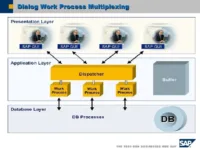
When any user tries to access the application like SD, MM, PP, FI/CO , they first touch the application layer which contains the required data and configuration. In order to access the Application, the user has to be authorized, which is done at Middle layer. Similarly if there is an issue for server like at OS, at Database or at Hardware level, then Middle layer people have to identify and direct it to the corresponding responsible person to look at the issue. Because these Middle layer people sit in the middle and look to both sides and trouble shoot the problem at Application level and OS level as per the issue, these people are called BASIS Admin.
The three layers are:
1️⃣ Presentation Layer (GUI Layer / Client Layer)
Definition:
This is the topmost layer of SAP architecture that interacts directly with the end-user. It is also called the client layer or SAP GUI layer.
Purpose:
- Allows users to communicate with SAP applications.
- Provides the Graphical User Interface (GUI) where users can enter data, run reports, and perform business functions.
Components:
- SAP GUI (Graphical User Interface): Installed on user’s computer.
- Can be Windows GUI, Web GUI, or SAP Fiori (modern browser-based interface).
Example:
When an employee enters a purchase order, they do it through SAP GUI. The input is then sent to the application layer for processing.
2️⃣ Application Layer (Middle Layer / Business Logic Layer)
Definition:
This is the middle layer of SAP architecture that processes business logic. It interprets requests from the presentation layer and interacts with the database layer to fetch or store data.
Purpose:
- Executes business processes and calculations.
- Handles workflow and transaction management.
- Processes user requests from the presentation layer.
Components:
- SAP Application Server: Runs programs and logic.
- Dispatcher: Directs requests to available work processes.
- Work Processes: Execute tasks like dialogue, background, update, spool, and enqueue.
- Message Server: Ensures communication among different application servers in a multi-server setup.
Example:
When a user creates a purchase order, the application layer checks inventory, validates vendor data, and calculates taxes before sending results back to the presentation layer.
3️⃣ Database Layer (Data Layer / Backend Layer)
Definition:
The bottom layer of SAP architecture, responsible for storing and managing all business data.
Purpose:
- Stores master data, transaction data, and configuration data.
- Ensures data integrity and security.
- Handles queries from the application layer.
Components:
- Database Server: Could be Oracle, SQL Server, SAP HANA, or other supported databases.
- Tables and Indexes: Store transactional and master data.
- Backup & Recovery System: Maintains data safety.
Example:
All purchase orders, employee records, and financial transactions are stored in the database layer. When the application layer requests data, it fetches it from here.
How It Works Together
- User Input: A user enters data in SAP GUI (Presentation Layer).
- Processing: The application layer processes the request using business logic and workflows.
- Storage/Retrieval: Data is stored or retrieved from the database layer.
- Output: Processed information is sent back to the user in the GUI.
Diagram Representation
+————————-+
| Presentation Layer | <– SAP GUI / User Interface
+————————-+
|
v
+————————-+
| Application Layer | <– Business logic / Processes
+————————-+
|
v
+————————-+
| Database Layer | <– Stores all data securely
+————————-+
Key Benefits of Three-Tier Architecture
- Scalability: Each layer can be upgraded or scaled independently.
- Security: Separation of layers ensures data protection.
- Performance: Load is distributed; GUI layer doesn’t process data directly.
- Flexibility: Can support multiple users and transactions efficiently.
SAP architecture is a three-tier system—Presentation Layer (user interface), Application Layer (business logic), and Database Layer (data storage). This design allows SAP to handle complex business processes in large organizations efficiently and securely.
Top 15 SAP Architecture Interview Questions & Answers
- What is SAP Architecture?
Answer:
SAP Architecture is a three-tier system designed to separate the user interface, business logic, and data storage. The three layers are:
- Presentation Layer – SAP GUI where users interact.
- Application Layer – Executes business logic and processes transactions.
- Database Layer – Stores all master, transactional, and configuration data securely.
- What are the three layers of SAP Architecture?
Answer:
- Presentation Layer – User interface for input/output.
- Application Layer – Business logic and processing.
- Database Layer – Data storage and management.
- What is the role of the Presentation Layer?
Answer:
- Acts as the interface between the user and SAP system.
- Takes user input and sends it to the application layer.
- Displays output results back to the user.
- Examples include SAP GUI, Web GUI, and SAP Fiori.
- What is the Application Layer in SAP?
Answer:
- It is the middle layer responsible for executing business logic.
- Consists of application servers, dispatcher, work processes, and message servers.
- Processes requests from the presentation layer and interacts with the database.
- What is the role of the Database Layer?
Answer:
- Stores all business data (master, transactional, configuration).
- Handles requests from the application layer to fetch or save data.
- Ensures data integrity, backup, and security.
- What are the key components of the Application Layer?
Answer:
- Application Server: Processes user requests.
- Dispatcher: Routes requests to available work processes.
- Work Processes: Dialogue, background, update, enqueue, spool.
- Message Server: Communicates across multiple application servers.
- What is a Dispatcher in SAP?
Answer:
- A dispatcher is part of the application server that manages incoming requests from users.
- It assigns requests to the available work processes for execution.
- What are SAP Work Processes?
Answer:
- Work processes are units of execution in the application layer.
- Types include:
- Dialogue Process (D): Handles interactive user requests.
- Background Process (B): Executes batch jobs.
- Update Process (U): Updates database after transactions.
- Enqueue Process (E): Manages locking of data.
- Spool Process (S): Manages printing requests.
- What is SAP GUI?
Answer:
- SAP GUI (Graphical User Interface) is the presentation layer client.
- Provides the interface for users to enter data and interact with SAP applications.
- What is SAP Fiori?
Answer:
- SAP Fiori is a modern, browser-based user interface.
- Provides role-based, responsive apps for better user experience on desktop and mobile.
- What is the difference between SAP One-Tier, Two-Tier, and Three-Tier Architecture?
Answer: Best Rated Gold IRA: A Complete Examine Report | iiQ8
| Tier | Description |
| One-Tier | Database + Application + Presentation on the same machine. Rarely used. |
| Two-Tier | Presentation layer on client; Application & Database on server. |
| Three-Tier | Presentation, Application, and Database layers are separate. Most commonly used in SAP. |
- What is SAP Message Server?
Answer:
- Used in multi-server environments.
- Helps communication between different application servers and balances workload.
- What are the advantages of three-tier SAP architecture?
Answer:
- Scalability: Each layer can scale independently.
- Security: Data layer is separate from users.
- Performance: Load is distributed across layers.
- Flexibility: Supports multiple users and transactions simultaneously.
- Can multiple users work simultaneously in SAP Architecture?
Answer:
- Yes. The three-tier architecture allows multiple users to access SAP simultaneously.
- Requests from users are processed by application servers without affecting the database performance.
- What is the difference between Presentation Layer and Application Layer?
Answer:
| Aspect | Presentation Layer | Application Layer |
| Function | Interface for users | Executes business logic |
| Components | SAP GUI, Fiori | Dispatcher, Work Processes |
| Interaction | Sends requests to app layer | Communicates with DB layer for data |
| Example | User entering a purchase order | Validating stock and calculating taxes |
Best Merry Christmas Wallpapers | iiQ8 Wishes