
What is ITIL ? Information Technology Infrastructure Library | iiQ8
What is ITIL ? Information Technology Infrastructure Library | iiQ8
What is ITIL? – Information Technology Infrastructure Library Explained
ITIL®, which stands for Information Technology Infrastructure Library, is a globally recognized framework of best practices for managing IT services. It provides organizations with structured guidelines to deliver high-quality IT services that align with business goals and customer needs.
Overview of ITIL
At its core, ITIL is a framework, guideline, or collection of best practices that helps organizations standardize IT service management. Its main objective is to improve efficiency, reduce risks, and enhance customer satisfaction by providing a systematic approach to delivering IT services.
Unlike rigid procedures, ITIL is flexible, allowing organizations of all sizes to adapt its practices according to their specific requirements.
History of ITIL
- 1980s: ITIL was first developed by the Central Computers and Telecommunications Agency (CCTA), part of the British government, to improve IT service management in public sector organizations.
- 1991: The Information Technology Infrastructure Management Forum was created in the UK to allow IT organizations to exchange knowledge. Later, it was renamed the Information Technology Service Management Forum (ITSMF).
- 2005: ITIL v3 was introduced, reducing the original 30+ books to five core volumes.
- 2011: ITIL publications were updated to reflect modern IT and business practices.
Purpose of ITIL
ITIL aims to align IT services with business needs. Its focus is on:
- Improving service quality: Ensuring that IT services meet agreed service levels and customer expectations.
- Maximizing efficiency: Streamlining IT processes to reduce waste, errors, and downtime.
- Minimizing risks: Implementing standardized processes reduces the risk of service failure.
- Continuous improvement: Promoting ongoing evaluation and enhancement of IT services.
Key Components of ITIL
ITIL v3 (the most widely used version) organizes IT service management into five core lifecycle stages, each addressing a critical aspect of IT service delivery:
- Service Strategy:
Focuses on understanding business goals and customer needs. It helps organizations decide which services to offer and how to manage them effectively. - Service Design:
Covers the planning and design of new or improved IT services. Includes processes like capacity planning, service catalog management, availability management, and IT security. - Service Transition:
Deals with the implementation of new or updated services into the live environment. Key processes include change management, release management, and knowledge management. - Service Operation:
Ensures that IT services are delivered efficiently and effectively on a day-to-day basis. This includes incident management, problem management, event management, and service desk functions. - Continual Service Improvement (CSI):
Focuses on ongoing assessment and enhancement of services and processes to improve business outcomes and IT service performance over time.
Benefits of ITIL
Implementing ITIL in an organization provides multiple advantages:
- Enhanced service delivery: Services meet customer expectations consistently.
- Reduced costs: Streamlined processes eliminate unnecessary work and inefficiencies.
- Better risk management: Standardized practices reduce errors and downtime.
- Improved customer satisfaction: Reliable IT services build trust and loyalty.
- Support for compliance: Helps achieve ISO/IEC 20000 standards for IT service management.
ITIL is not just a methodology; it is a comprehensive framework that empowers IT organizations to deliver high-quality, customer-focused services efficiently. By following ITIL practices, businesses can ensure that their IT services remain reliable, scalable, and aligned with ever-changing business needs.
What is ITIL ? Information Technology Infrastructure Library | iiQ8
Continual Service Improvement Measurements in ITIL, ITIL Course
ITIL, ITIL framework, IT service management, ITIL v3, ITIL certification, ITIL best practices, ITIL lifecycle, ITIL processes, ITIL courses, Information Technology Infrastructure Library
Top ITIL Exam & Interview Questions with Answers
- What is ITIL and why is it important?
Answer:
ITIL (Information Technology Infrastructure Library) is a framework of best practices for IT Service Management (ITSM). It aligns IT services with business needs, improves efficiency, reduces risks, and ensures high-quality service delivery. ITIL is important because it standardizes IT processes, improves customer satisfaction, and supports business objectives.
- Name the five lifecycle stages of ITIL v3.
Answer:
The five ITIL v3 lifecycle stages are:
- Service Strategy – Understanding business needs and creating a strategy.
- Service Design – Designing new or updated IT services.
- Service Transition – Implementing services into production.
- Service Operation – Managing day-to-day service delivery.
- Continual Service Improvement (CSI) – Ongoing evaluation and enhancement of services.
- What is the difference between Incident Management and Problem Management?
Answer:
- Incident Management: Focuses on restoring normal service quickly when something goes wrong (e.g., a server crash).
- Problem Management: Focuses on finding the root cause of incidents to prevent recurrence.
Continual Service Improvement in Activities and Concepts ITIL, ITIL Course
- What is a Service Catalog?
Answer:
A Service Catalog is a list of all IT services provided by an organization, including details like service description, service owner, cost, and service level agreements (SLAs). It helps customers and users understand and request IT services easily.
- Explain the purpose of the Change Management process.
Answer:
Change Management ensures that all changes to IT services are evaluated, approved, implemented, and reviewed systematically to minimize risk and disruption. It prevents unauthorized changes and ensures business continuity.
- What is SLA (Service Level Agreement)?
Answer:
An SLA is a formal agreement between the IT service provider and the customer that defines:
- The services to be provided
- Performance targets (e.g., uptime, response time)
- Responsibilities of both parties
It ensures accountability and measures service quality.
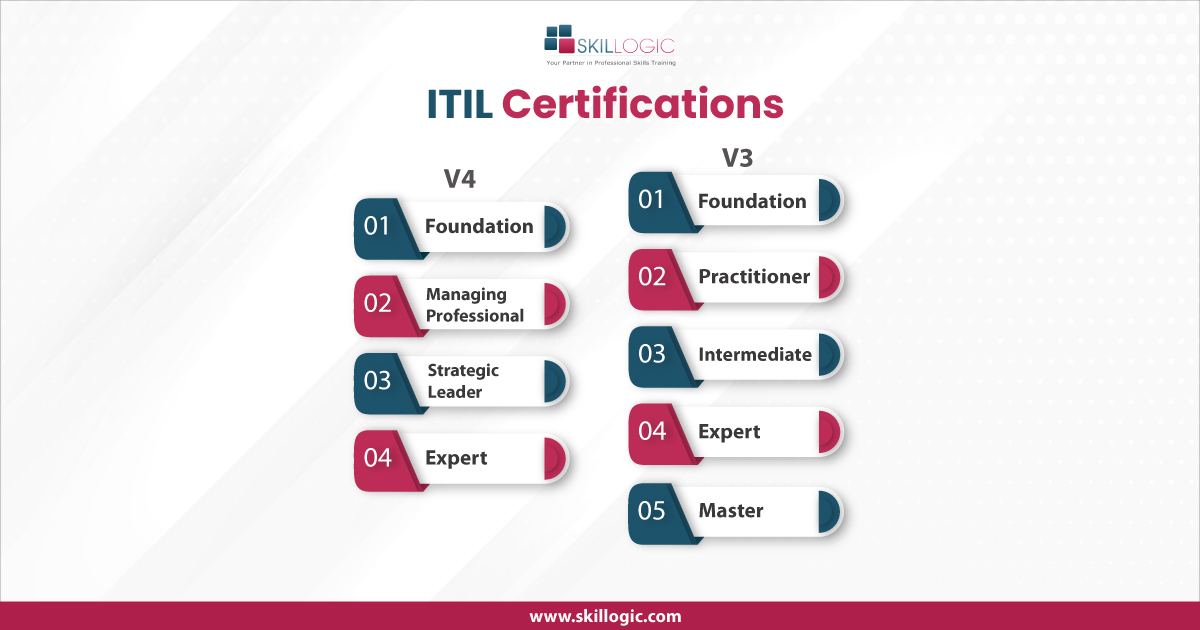
- What is the difference between ITIL v3 and ITIL v4?
Answer:
- ITIL v3: Focuses on the service lifecycle and structured processes.
- ITIL v4: Focuses on value co-creation, flexibility, and modern practices like Agile, DevOps, and digital transformation, while still keeping ITIL best practices.
- What is the purpose of Continual Service Improvement (CSI)?
Answer:
CSI focuses on ongoing evaluation and enhancement of IT services to:
- Improve service quality
- Reduce costs
- Increase efficiency
- Align IT services with changing business needs
Tools like PDCA (Plan-Do-Check-Act) are commonly used in CSI.
- Can you name some key ITIL processes under Service Operation?
Answer:
Key Service Operation processes include:
- Incident Management
- Problem Management
- Event Management
- Request Fulfillment
- Access Management
- IT Operations Control
These ensure smooth day-to-day IT service delivery.
- How does ITIL help in an interview scenario?
Answer:
- Demonstrates knowledge of best practices in IT Service Management.
- Shows understanding of ITIL processes, lifecycle stages, and service delivery standards.
- Helps answer scenario-based questions like:
- “How would you handle a major service outage?”
- “Explain steps to implement a critical change safely.”
- Knowledge of ITIL enhances employability in roles like ITSM Consultant, Service Desk Manager, and IT Operations Manager.
7 Steps to Improvement ITIL, information technology infrastructure library 1