

7 Brain Damaging Habits, iiQ8 Info, WHO iiQ8 Health
7 brain damaging habits, iiQ8 Info, WHO iiQ8 Health
🧠 7 Biggest Brain-Damaging Habits (Explained in Detail)
Let’s break down each point one by one — what people believe, what it actually means, and how it may affect your brain and overall health.
7 Biggest brain damaging habits
1: Missing breakfast
2: Sleeping late
3: High sugar consumption
4: More sleeping specially at morning
5: Eating meal while watching TV or computer
6: Wearing Cap/scarf or socks while sleeping
7: Habit of blocking / Stopping Urine
World Health Organization – WHO
7 brain damaging habits, iiQ8 Info, WHO iiQ8 Health
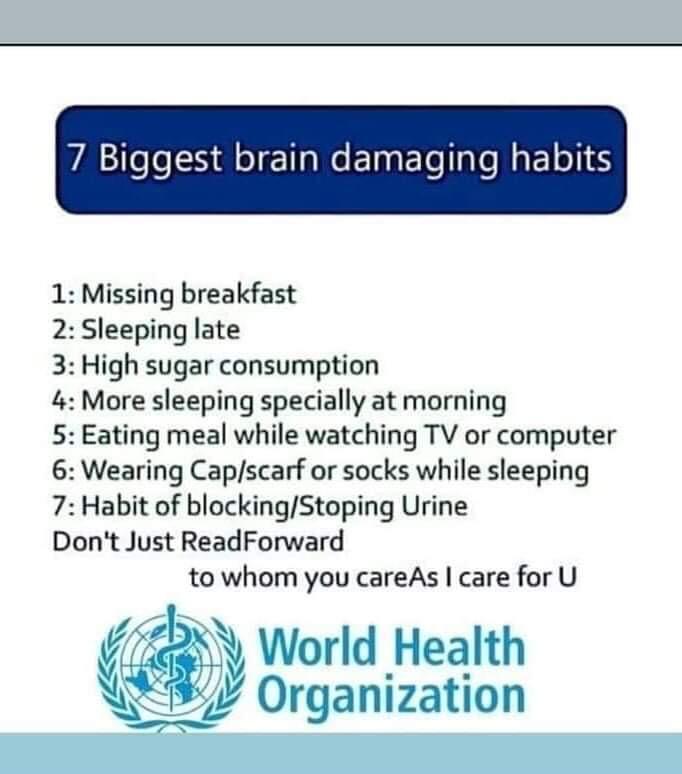
7 brain damaging habits, iiQ8 Info, WHO iiQ8 Health
Telephone numbers in Kuwait, iiQ8, Telephone number series Q8
1️⃣ Missing Breakfast
What people say:
Skipping breakfast reduces energy and nutrient supply to the brain, leading to lower concentration and fatigue during the day.
Explanation:
Your brain needs glucose — its main fuel — to work efficiently. After sleeping, your blood sugar is usually low. Skipping breakfast can make you feel sluggish, irritable, or unfocused.
Over time, regularly missing breakfast may contribute to:
- Reduced attention and memory performance
- Lower mood or irritability
- Possible overeating later in the day
Healthy habit:
Have a light but balanced breakfast — like whole grains, fruit, nuts, eggs, or yogurt — within 2 hours of waking.
2️⃣ Sleeping Late
What people say:
Late-night sleep affects your brain’s recovery and cognitive performance.
Explanation:
Your brain repairs and organizes itself during deep sleep. Going to bed late or staying up consistently disturbs your circadian rhythm (natural sleep-wake cycle), which can:
- Reduce memory consolidation (how your brain stores new info)
- Lower alertness and concentration
- Increase stress hormones (like cortisol)
- Over time, raise risk for anxiety, depression, and even Alzheimer’s-type changes
Kuwait Bus Route – Latest Bus Routes in Kuwait and Bus stops https://kuwaitbusroute.blogspot.com
Healthy habit:
Try to maintain a consistent sleep routine. Ideally, sleep 7–8 hours per night, and aim for pre-midnight sleep when possible.
3️⃣ High Sugar Consumption
What people say:
Too much sugar damages the brain’s ability to learn and remember.
Explanation:
High sugar diets can cause inflammation and oxidative stress in the brain. They also interfere with insulin regulation — and insulin plays a role in brain signaling. Over time, excess sugar can:
- Slow down cognitive performance
- Increase risk of obesity and type-2 diabetes (both linked to dementia risk)
- Affect mood and focus (sugar crashes)
Healthy habit:
Cut down on sweetened drinks, candies, pastries, and sugary cereals. Choose natural sugars from fruits and whole foods instead.
4️⃣ Oversleeping (Especially in the Morning)
What people say:
Sleeping too much can make the brain “lazy” or sluggish.
Explanation:
Occasional long sleep is okay — but regularly oversleeping can be a sign of poor sleep quality or underlying issues like depression or thyroid imbalance.
It also disrupts your body clock, leaving you groggy, less motivated, and more prone to cognitive fog.
Research shows people who sleep more than 9 hours daily have higher risks of:
- Memory decline
- Headaches and fatigue
- Poor metabolic and brain health
Healthy habit:
Stick to 7–8 hours of quality sleep. Wake up at a consistent time and get morning sunlight to regulate your body clock.
5️⃣ Eating Meals While Watching TV or Using a Computer
What people say:
Mindless eating while distracted can reduce brain focus and digestion efficiency.
Explanation:
When you eat while watching TV or scrolling your phone, your brain’s attention splits. You may:
- Overeat without realizing
- Get poor digestion (less saliva and slower metabolism)
- Miss sensory cues that help with memory and satisfaction
This “disconnected eating” habit can also increase risk of obesity, which indirectly affects brain health due to reduced blood flow and higher inflammation.
Healthy habit:
Practice mindful eating: turn off screens, chew slowly, and focus on your food. It helps both your digestion and your mental clarity.
6️⃣ Wearing Cap, Scarf, or Socks While Sleeping
What people say:
Covering the head during sleep may reduce oxygen flow to the brain.
Explanation:
This one’s a bit mixed — there’s no strong medical evidence that wearing a light cap or socks damages your brain. However:
- If the head is tightly covered with thick fabric or scarf, it can trap heat and limit airflow, especially in warm conditions.
- Poor ventilation might make you uncomfortable, reduce sleep quality, or in extreme cases, cause mild oxygen reduction (mainly if you already have breathing issues).
Healthy habit:
Wear breathable materials if you must cover your head for warmth. Avoid tight scarves or anything that blocks air circulation around your face.
7️⃣ Habit of Blocking or Stopping Urine
What people say:
Holding urine for long periods harms your nervous system and brain.
Explanation:
While this doesn’t directly damage the brain, it does strain your urinary system and cause discomfort, which can trigger stress responses in your body. Holding urine too long:
- Increases risk of urinary tract infections (UTIs)
- Can weaken bladder muscles
- Causes buildup of toxins and increases stress hormones, indirectly affecting mental well-being
Healthy habit:
Listen to your body — don’t delay bathroom breaks. A healthy routine keeps your kidneys and body chemistry in balance, supporting overall brain health.
TikTok alternatives in India, iiQ8 news, Chingari, Mitron
🧩 Summary Table
| # | Habit | Main Effect on Brain | Healthier Alternative |
| 1 | Missing Breakfast | Low energy, poor focus | Eat a light, nutritious breakfast |
| 2 | Sleeping Late | Memory & mood decline | Sleep 7–8 hrs, earlier bedtime |
| 3 | High Sugar Intake | Inflammation, memory loss | Reduce sugar, eat whole foods |
| 4 | Oversleeping | Fatigue, sluggish brain | Maintain 7–8 hr consistent sleep |
| 5 | Eating While Distracted | Mindless eating, poor digestion | Practice mindful eating |
| 6 | Covering Head While Sleeping | May reduce airflow, discomfort | Use breathable materials |
| 7 | Holding Urine | Stress, infection risk | Go when you need to go |
⚕️ Note on WHO Reference
The World Health Organization (WHO) promotes overall brain health through lifestyle — balanced nutrition, adequate sleep, exercise, mental stimulation, and stress management.
However, the specific “7 habits” list circulating online is a popular wellness summary shared on many health blogs and social media posts (like iiQ8 Info), not an official WHO medical document.
Your brain is your body’s command center — it needs proper rest, nutrition, and circulation.
Avoiding these daily habits won’t just protect your neurons — it will keep your energy, focus, and mood balanced.
Think of it this way: every small habit is like a message you send to your brain — “I care about you.”
Eat well. Sleep well. Move often. And listen to your body’s signals.
Measuring Internet speed, check your internet Speed, Speed Test
7 brain damaging habits, WHO brain health tips, iiQ8 Health article, habits that damage your brain, how to improve brain health, healthy lifestyle for the brain, brain care routine, mental fitness tips, daily habits affecting brain, iiQ8 info health awareness